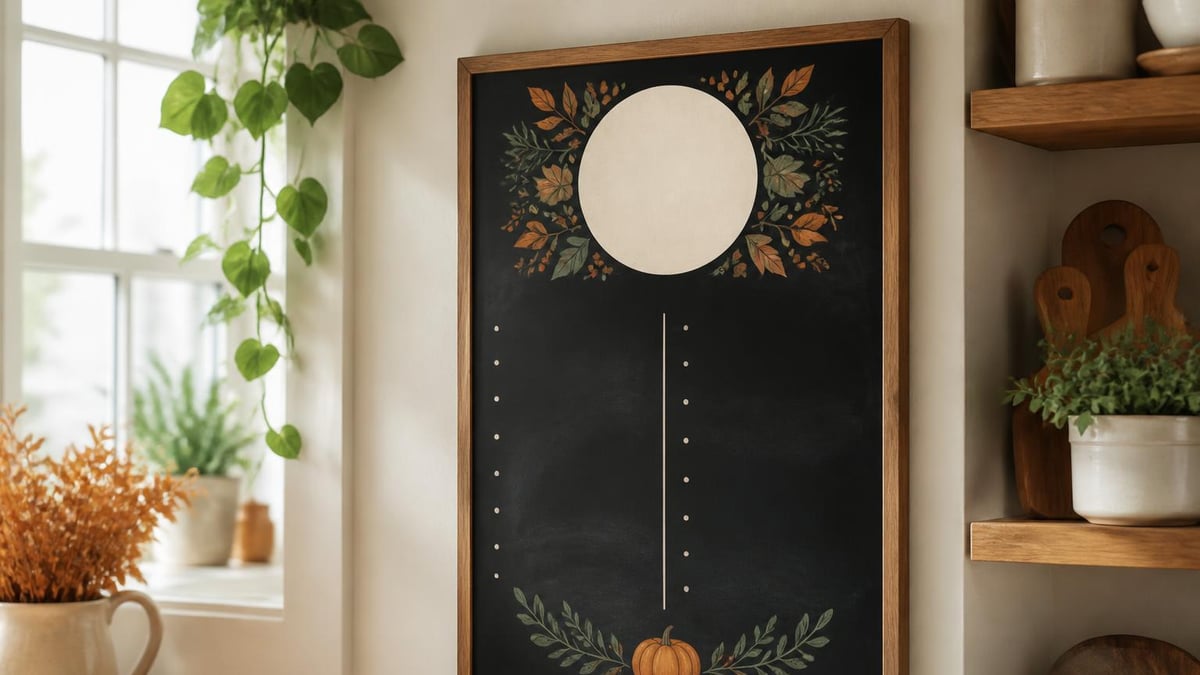
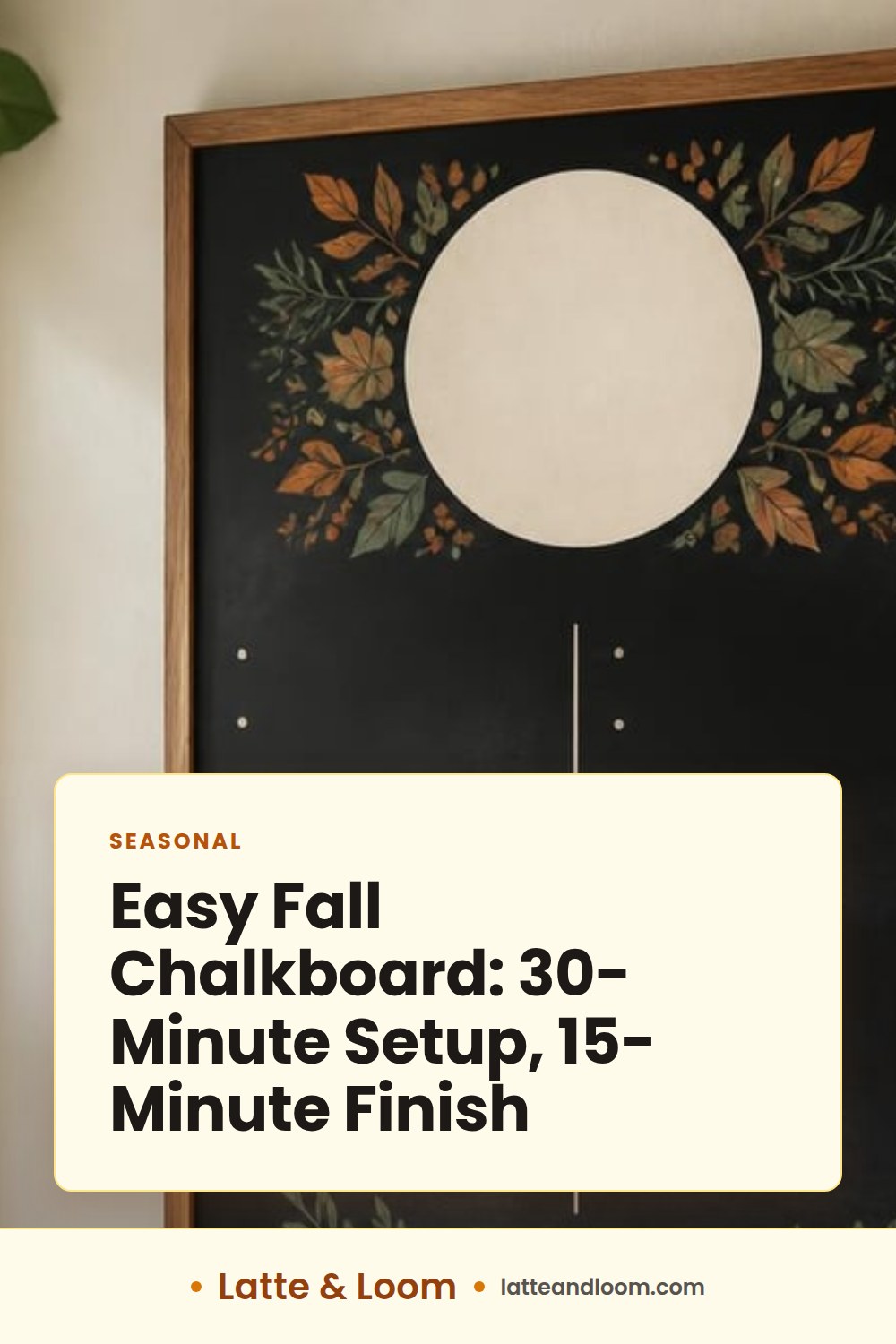
A fall chalkboard feels cozy when it uses a small, calm palette, a clear focal point, and a simple layout you can update in minutes. Start with a 30-minute setup and a 15-minute finishing pass: choose a board, pick 3 to 4 colors (burnt orange, sage green, cream, plus white), sketch a circular focal element with a border, and set a two-column text area for notes or quotes.
Introduction and direct answer
What makes a fall chalkboard feel cozy and not cluttered
Cozy comes from restraint. I use one focal shape, two type sizes, and a limited palette so the eye rests instead of racing.
Keep white for key lines and cream or sage for fills. A circular motif with a border gives the eye a place to land, and a two-column area keeps copy tidy and readable.
How to choose a layout that works in a small space
Measure the wall area first. For a narrow corner choose a vertical board 12 x 18 inches; for a small wall 18 x 24 inches works well. Use a simple grid or a one-third circle plus two-column text area so nothing competes.
A quick-start plan to create your first fall chalkboard in one afternoon
- Gather supplies - chalk markers, soft microfiber cloth, small ruler.
- Clean the surface with a damp cloth, then dry.
- Sketch a circular focal element with a border on the top third, add a two-column area below, and block in color accents in burnt orange, sage green, and cream.
- Finish with a 15-minute pass to sharpen lines and add tiny accents.
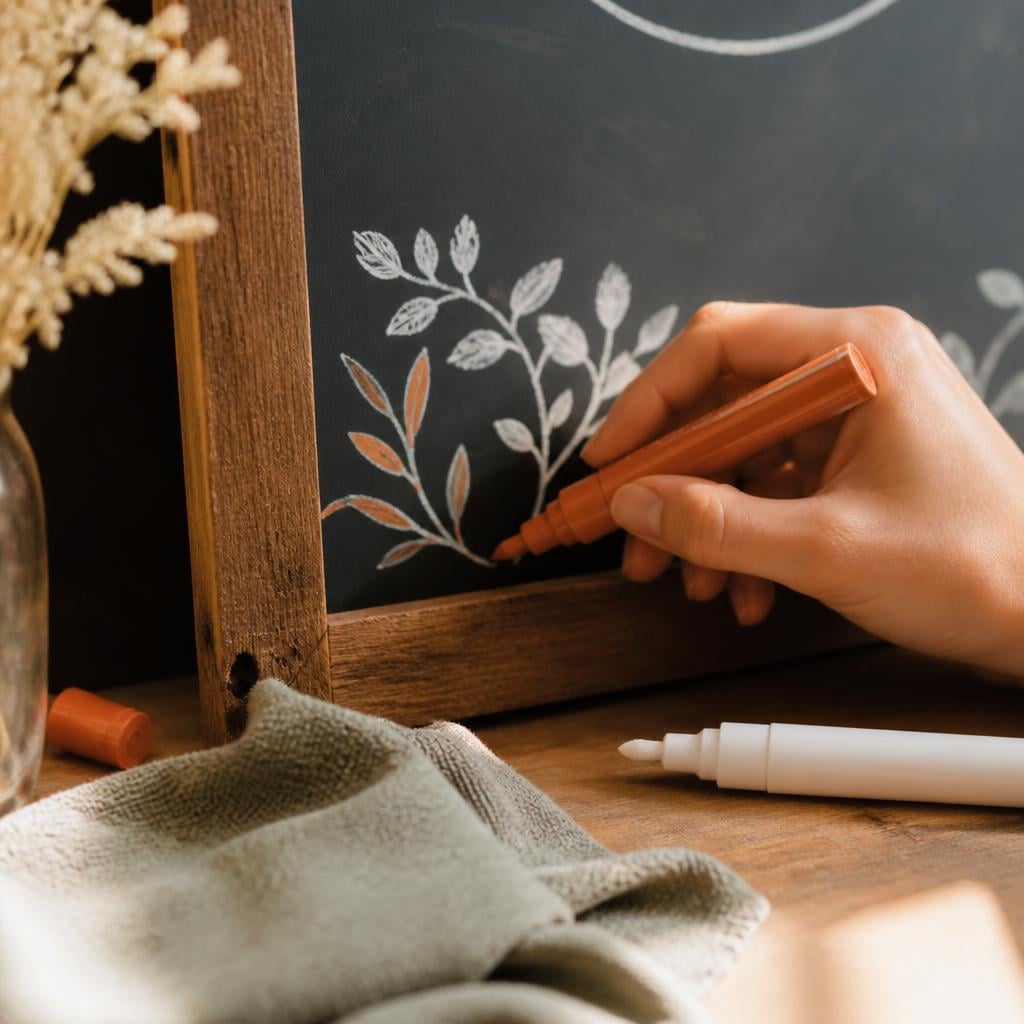
Fall chalkboard quick snapshot
Palette ideas that read fall without shouting
Use muted tones rather than neon. My go-to trio is burnt orange, sage green, and cream with white for highlights. Add a dark charcoal or deep brown for outlines if you need more contrast.
Palette example:
- Burnt orange - accent leaves or banners
- Sage green - background accents or small shapes
- Cream - lettering fills and soft highlights
- White - outlines, small highlights, and time/price details
If you like, see how a small seasonal coffee station pairs with a chalkboard in my post on Autumn Coffee Station Decor Ideas for a Cozy Home.
Layout templates you can reuse week to week
Pick one of these and use it again with different copy:
- Circular focal element with a border at upper third plus two-column text below. This balances a graphic with notes.
- Grid and freehand hybrid: light 1-inch grid for straight copy, freehand for a small sketch in a corner.
- Two-column habit for daily quotes: left column quote, right column daily menu or tasks.
- Corner flourish that frames a scene: small vine or leaf cluster in one corner, text opposite.
Materials and setup tips to avoid common mistakes
- Always wipe the board first with a damp cloth, then dry. This removes chalk dust and improves marker adhesion.
- Use chalk markers and a soft microfiber cloth for clean lines and easy correction. Avoid heavy-handed pressure that gouges painted surfaces.
- If you need straight lines, use a small ruler or painter’s tape repositioned for each line.
Materials, Time, and Cost
| Material | Typical prep/use time | Approximate cost |
|---|---|---|
| Small chalkboard 12 x 18 in | Setup 5 minutes | $10 - $30 |
| Chalk markers (set of 4-8) | Use across projects | $6 - $25 |
| Soft microfiber cloth | Ongoing | $3 - $10 |
| Chalkboard paint (optional) | Cure 24-48 hours | $15 - $35 per quart |
| Ruler or small level | One-off | $3 - $15 |
| Small frame or hook | Install 10 minutes | $5 - $20 |
Note: Price ranges are approximate so you can plan.
Five fall chalkboard concepts you can start today
1. Harvest porch sign
Design: Large circular wreath shape at center, cream script inside reading “Harvest” or “Welcome.” Add small burnt orange pumpkins and sage leaves around the wreath border.
Time: 30 minutes to sketch and fill, 15 minutes for details.
2. Cozy kitchen quote with a time-teller motif
Design: Circle as a clock face in top third, cream numbers and white hands. Under the clock, two-column area with a short quote left and daily warm-drink suggestion right. Use sage lines for separators.
Time: 20 to 40 minutes depending on lettering.
Pair this with a simple fall menu from my post on Fall Recipe Ideas for Cozy Home Cafés.
3. Woodland creatures with seasonal phrases
Design: Small fox or deer silhouette in cream or sage at one corner, circular badge above with “Autumn Days.” Use burnt orange leaves as a trail that frames the text. Keep copy to one line.
Time: 30 to 45 minutes.
4. Monthly calendar with a fall color block design
Design: Grid across lower two-thirds, a circular title badge at top with month name in cream. Color-code weekends with subtle burnt orange blocks. Use a thin white border to keep dates readable.
Time: 40 to 60 minutes first build; 15 minutes weekly update.
5. Simple menu board for warm drinks and treats
Design: Two-column layout: left column lists drinks, right column lists snacks. Small circular badge at top for the daily special. Use sage for drinks, burnt orange for sweets, and white for prices.
Time: 25 to 45 minutes.
Step by step: build a simple fall chalkboard in 30 minutes
What to prepare
- Chalkboard (12 x 18 in or 18 x 24 in)
- Chalk markers: white, cream, burnt orange, sage green
- Soft microfiber cloth and a damp rag for cleaning
- Small ruler or straight edge
- A simple sketch on scrap paper
Step by step process
- Wipe the chalkboard with a damp cloth, then dry completely - 3 minutes.
- Lightly draw your main circle at the top third with a white marker or chalk - 5 minutes.
- Add a thin border around the circle using cream; keep it 1/4 inch thick - 4 minutes.
- Block in the two-column area beneath the circle using a ruler to keep columns straight - 5 minutes.
- Write your headline or month inside the circle in a bold cream or white script - 5 minutes.
- Fill small accents in burnt orange and sage green: leaves, small pumpkins, or color blocks - 5 minutes.
- Step back and refine letters and lines with a soft microfiber cloth to clean edges - 3 minutes.
This totals roughly 30 minutes for the initial build.
Finishing pass - 15 minutes
- Sharpen any outlines in white or dark brown for contrast - 5 minutes.
- Add tiny highlights in cream or white to make elements pop - 5 minutes.
- Wipe around the edges and dry any smudges with the microfiber cloth - 5 minutes.
Finishing touches and cleanup
- Wipe the board with a damp cloth if you have excess dust, then dry.
- Store markers horizontally so tips stay saturated.
- Keep one blank corner for quick notes or a small date sticker you can change.
Palette, tools, and care for long-lasting chalkboard art
Color palettes that feel autumnal
- Primary trio: burnt orange, sage green, cream.
- Accent options: deep brown or charcoal for outlines; a soft mustard for small pops.
Stick to 3 to 4 colors to avoid visual clutter.
Tools that deliver clean lines
Use chalk markers for crisp strokes and a soft microfiber cloth to clean edges. A small angled brush can soften fills if you want a handmade look.
Care tips to keep layouts legible
Wipe with a damp cloth, then dry after heavy use. Re-trace faint letters every few weeks if the board is in direct light or handled often.
Seasonal refresh ideas without repainting
- Swap the headline in the circular focal badge.
- Add a single new accent color for one season only, like deep purple for late fall.
- Replace the daily column text but keep the graphic intact.
Layout templates you can reuse
Grid and freehand hybrid
Use a faint 1-inch grid to keep date boxes and prices straight, then draw a freehand wreath or creature in one corner.
Two-column habit for daily quotes
Left column for a short quote, right column for daily tasks or a mini menu. Keep column widths consistent and use the same separator line each week.
Circular focal point with a border
Place a circle at the top third, add a 1/4-inch border, then a short title inside. This is the layout strategy I use most - it pairs well with a two-column text area underneath.
Corner flourish that frames a scene
Keep the main text centered and add a small cluster of leaves or a creature in one corner to frame the message without overpowering it.
Maintenance and safety notes
Chalkboard cleaning routine
Wipe the surface with a damp cloth, then dry. For deeper cleaning, use a mild soap diluted in water, rinse with a damp cloth, and dry.
Why and when to re-trace letters
Chalk markers fade with handling and light exposure. Re-trace every 2 to 4 weeks in high-traffic spots or whenever lines look thin.
Storage and surface considerations
Store markers horizontally and cap tightly. Avoid placing boards where rain or direct sun will hit them for long periods; moisture and UV accelerate fading.
For more small, quick fall projects to pair with your chalkboard, try Fall Crafts for a Cozy Home You Can Finish This Weekend and my ideas for Cozy Fall Decor Ideas for a Warm Home.
Frequently asked questions
What surface is best for a fall chalkboard design?
A smooth, matte chalkboard surface is best; it accepts chalk markers cleanly and gives consistent lines. Painted chalkboard surfaces work too, but let paint cure fully for 24 to 48 hours before writing.
How long will a chalkboard design last before fading?
A chalk marker design stays crisp for about 2 to 4 weeks with normal indoor use. High-traffic locations or direct sunlight can reduce that to under two weeks.
What are quick fixes for smudges or mistakes?
Use a soft microfiber cloth slightly dampened to erase the area, then dry and re-letter. For stubborn marks, a drop of mild soap on a damp cloth will lift residue; rinse and dry afterward.
Which colors read best for fall on a chalkboard?
Muted burnt orange, sage green, cream, and white read best on a dark background. Use deep charcoal or brown for outlines if you need stronger contrast.
How can I rearrange a design without erasing everything?
Work in layers: keep the main graphic and swap only text blocks. Use removable painter's tape to mask sections you want to protect or trace the circle and columns lightly with chalk so you can change copy while keeping the frame.
Tools and gear mentioned
Coffee Brew Ratio Calculator
Coffee-to-water for pour-over, French press, AeroPress and espresso.
Cost Per Cup Calculator
What your home coffee really costs versus the café.
Coffee Station Budget Planner
Pick a space and a budget tier and get an itemised shopping list.
Caffeine Calculator
Caffeine per drink and your daily total against the 400 mg guideline.