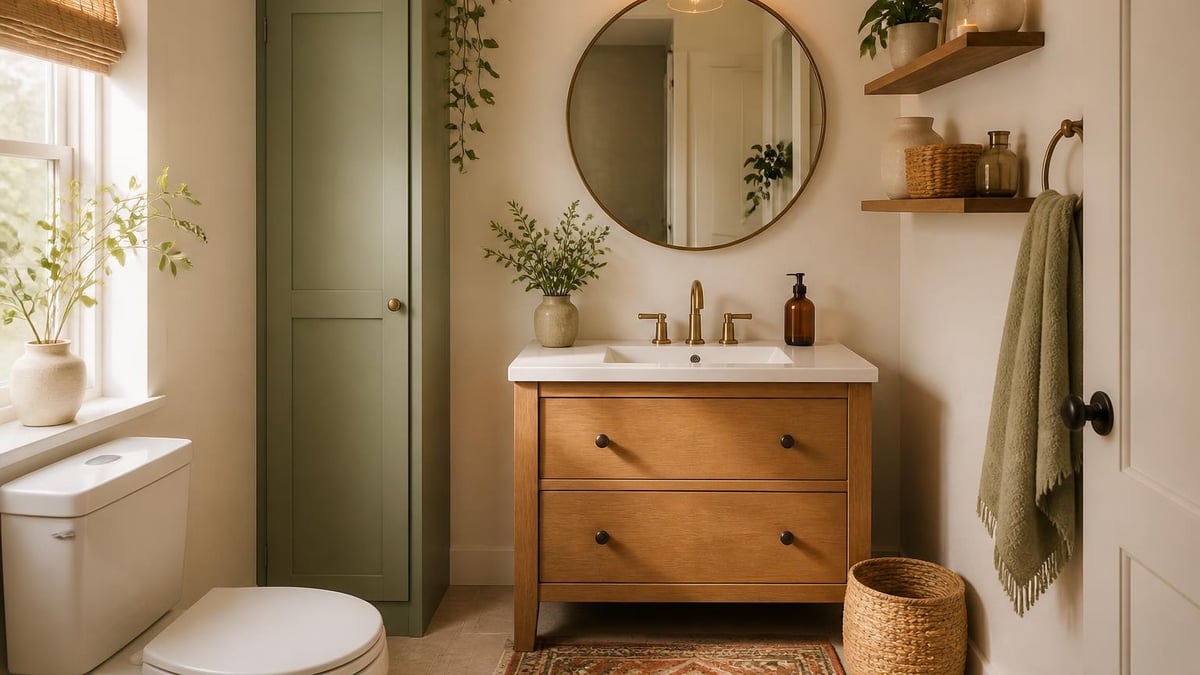
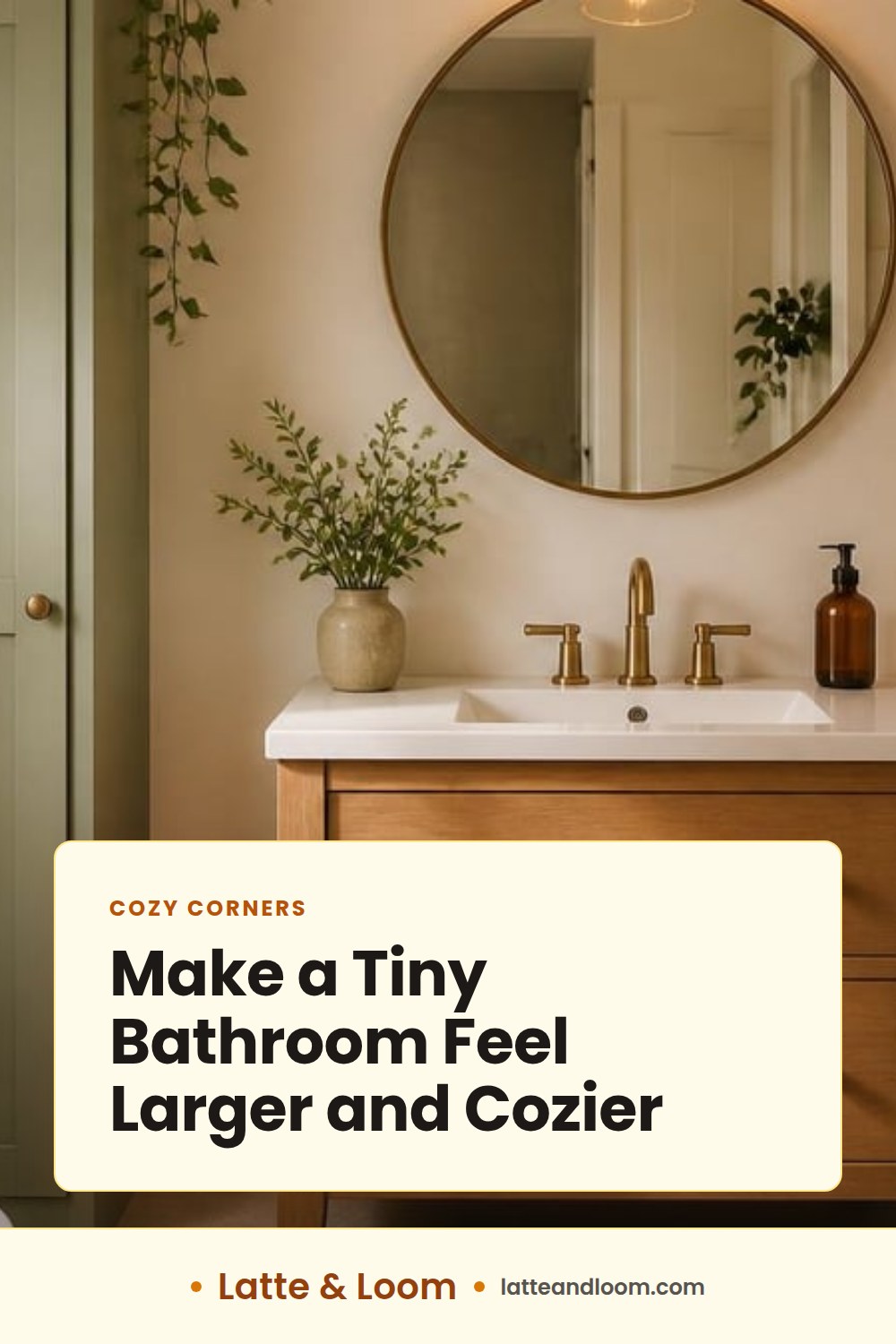
You can make a tiny bathroom feel cozy and larger by designing around scale, using a light cohesive palette, and choosing storage that sits on the wall instead of on the floor. Focus on vertical storage, a bright mirror and layered lighting, and one or two warm textures so the corner reads intentional rather than crowded.
Start with a plan that respects scale
Small spaces punish guesses. I always measure first and plan for clearances before buying shelves or towels. Pick pieces that match the size of the fixtures and the walkways around them so corners stay usable.
- Measure twice, buy once: write down width, depth, and any inset or angled corners.
- Ensure a comfortable walking path around fixtures so movement isn’t restricted.
- Position fixed items like towel bars or hooks at heights that work for the people who use the space.
Trade-off: a larger cabinet buys storage but eats visual space. I prefer slim, tall units over wide low ones in corners because they keep the floor visible.
Use a light, cohesive palette to read as larger
Light, consistent colors reduce visual stops. Choose two light neutrals and one muted accent and use them across walls, textiles, and small decor so the corner reads as part of the room.
- Paint the ceiling the same light neutral as the walls or one shade lighter to make the room feel taller.
- Use the accent on one small area - a shelf backboard, a single towel, or a plant pot.
Here is a simple palette table to get you started:
| Role | Color idea | Example use |
|---|---|---|
| Light neutral 1 | Cool white or near-white | Walls and ceiling |
| Light neutral 2 | Soft greige or warm off-white | Vanity front or shelves |
| Accent | Muted sage, dusty blue, or warm terracotta | Towels, small decor, plant pot |
If you like styling shelves, check how I keep small displays tidy in How to Style a Trinket Shelf Without Clutter. For ideas that translate well to narrow corners, see Apartment Coffee Station Ideas: A 60 cm Corner That Works.
Maximize vertical and wall storage
Use the walls so the floor stays open. Wall-mounted pieces read as lighter and give the eye a place to rest.
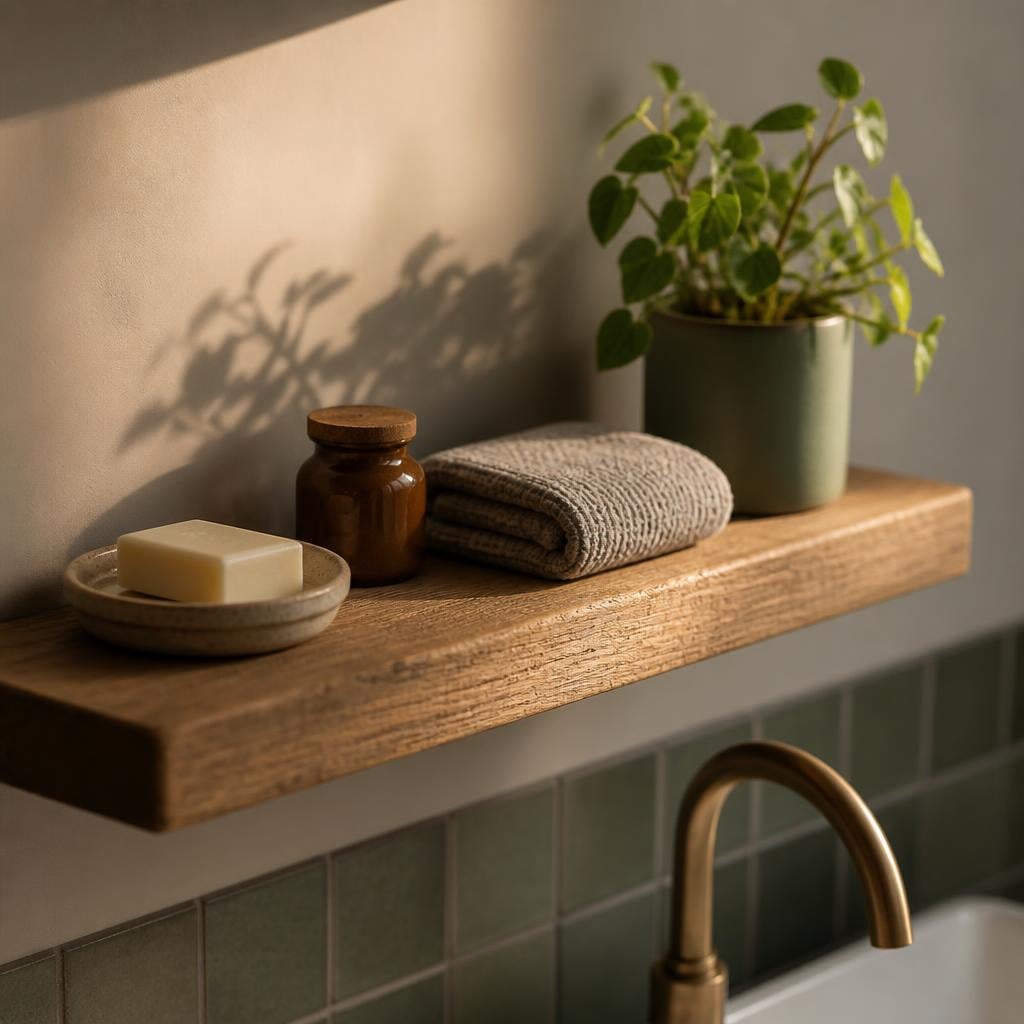
- Install a floating shelf 8 to 10 inches deep above the sink for soap, a tray, and one plant.
- Choose slim, tall cabinets 10 to 14 inches deep that tuck into corners between fixtures.
- Mount a narrow medicine cabinet at eye level instead of a bulky mirror frame.
Trade-offs: wall storage can make cleaning harder if items collect dust. Limit surfaces to two or three spots.
Choose mirrors and lighting that bounce light
Use a mirror to enhance perceived space and pair it with layered lighting for a clean, welcoming look.
- Place sconces or vertical lights on either side of the mirror at a height that provides even, shadow-free light for the people who use it.
- Consider a mirror with integrated LED lighting if you need extra brightness and want a single-piece solution.
Trade-offs: highly reflective finishes show water spots and fingerprints. Plan a weekly wipe-down.
Layer textiles and texture for warmth without clutter
Texture brings comfort. Keep textiles minimal, coordinated, and moisture-friendly.
- Stick to two towel sizes: one 27 x 52 inch bath towel and one 16 x 30 inch hand towel per person.
- Use a low-pile, quick-dry rug 20 x 30 inches in front of the sink or shower.
- Choose a shower curtain with a subtle pattern in the chosen accent color to add depth without busying the room.
Keep textiles in the same palette so they read as a single layer rather than many competing pieces.
Protect finishes with simple maintenance routines
Small bathrooms age fast if you skip upkeep. A 10-minute weekly routine prevents most problems.
- Wipe down glass and metal with a microfiber cloth after shower use.
- Clean tile grout with a baking soda paste every 3 months; mix 1/2 cup baking soda with 2 to 3 tablespoons of water to make a paste.
- Do a quick 10-minute wipe of surfaces with mild dish soap and warm water weekly.
Assessing your space and setting a playlist for success
A plan and good music make the work easier. Start by documenting the physical facts, then decide where you want the eye to land.
Measure key dimensions and door swing
- Measure width and depth of the room, and note the door swing direction and clearance behind it.
- Measure from the floor to any HVAC vents, light switches, and the bottom of any window.
- Mark clear walking paths and fixture clearances on your floor plan so you can see how people will move.
Decide focal points and where to place a mirror
- Choose one focal point - typically the sink wall or a corner shelf - and make it neat and intentional.
- Mirrors are best on the wall opposite any natural light source or above the vanity to reflect light back into the room.
Identify hidden storage opportunities
- Space above the door often holds a shallow shelf 6 to 8 inches deep for rarely used items.
- The vertical gap between the toilet tank and the wall can accept a 6 to 8 inch deep slim cabinet.
- Behind-mirror medicine cabinets gain storage without changing sightlines.
Color and material choices that visually enlarge a bath
Opt for light neutrals and cool whites
Cool whites and pale greiges make corners recede visually. Keep paint finishes satin on walls for easy cleaning and a low sheen.
Incorporate warm wood or matte metal accents sparingly
Use warm wood or matte metal in small doses - a wooden shelf, a single towel hook, or a thin faucet in matte black or brushed brass - to add warmth without heavy visual weight.
Pick reflective finishes for key surfaces
- Polished chrome or glossy tile helps bounce light.
- Keep large areas matte to avoid overwhelming glare and to hide water spots.
Storage that appears to disappear into the room
Choose storage that reads like part of the wall rather than a separate object.
Floating shelves above the sink
- Use shelves 8 to 10 inches deep, spaced 12 to 18 inches apart, depending on mirror height.
- Keep them sparsely styled: a soap dish, a small jar for cotton swabs, and one folded towel.
Slim, tall cabinets that tuck between fixtures
- Pick cabinets 10 to 14 inches deep and 12 to 20 inches wide to fit narrow gaps.
- Anchor cabinets to studs and use wall fasteners rated for the cabinet weight plus contents.
Over-the-door hooks and magnetic organizers
- Over-the-door hooks free up wall space and are removable if you rent.
- Magnetic strips mounted inside a cabinet door hold bobby pins, nail clippers, and metal grooming tools.
Textures and textiles that add coziness without crowding
Soft towels in a consistent palette
- Keep two bath towels and two hand towels per person, all in the same palette to reduce visual clutter.
- Rotate towels every three to four days and store the extras in a single basket or cabinet.
Low-pile, moisture-friendly rug
- A 20 x 30 or 24 x 36 inch rug in synthetic quick-dry fibers resists mold and keeps the floor comfortable.
- Choose a rug with a thin rubber backing to avoid bunching.
Shower curtain with subtle pattern that matches the palette
- A curtain with a small-scale pattern in your accent color adds interest without dominating the room.
- Replace or wash the curtain liner every 6 months.
Woven baskets for lines of order
- Use one 12 x 10 x 8 inch basket for toilet paper rolls and one 14 x 10 x 8 inch basket for extra towels.
- Baskets keep items grouped so corners look tidy.
Lighting and mirrors that open up a small bathroom
Layer ambient, task, and accent lighting
- Use a ceiling-mounted fixture for ambient light and wall sconces or an LED vanity bar for task lighting.
- Add a small directional light or puck under a shelf for accenting decor or a plant.
Choose a mirror with built-in lighting if possible
- Integrated-LED mirrors provide even light for grooming and save space you would spend on separate fixtures.
Place lights around the mirror at eye level
- Mount sconces so the light is positioned to reduce shadows on the face. Adjust height to suit household members and fixtures.
- If using a single light above the mirror, choose one long bar that spreads light evenly across the face.
Step-by-step decor plan you can follow
- Measure the width, depth and clearance around the door and fixtures and note any angled corners or obstructions.
- Choose a unifying color palette of two light neutrals and one muted accent from the table above.
- Install a slim storage solution that minimizes visual bulk - a 10 to 14 inch deep tall cabinet or a floating medicine cabinet.
- Pick a mirror that expands the view and adds reflectivity; choose a size and shape that visually balances the vanity.
- Layer textiles: two bath towels per person, one hand towel each, and a low-pile rug that matches the palette.
- Limit decorative items to a small, cohesive set and keep surfaces clear for a tidy look.
If you want small-shelf styling tips that work in tight places, see How to Display a Mug Collection: Cozy Corners that Work.
By Nora Whitfield, editor. I write about small spaces and practical design. This plan keeps costs low, uses common materials, and focuses on simple maintenance so small bathrooms stay useful and calm.
Frequently asked questions
What is the best color for a tiny bathroom to feel bigger?
Choose a cool white or soft greige for walls and ceiling to reduce contrast at edges and reflect light. Use one muted accent sparingly so the room keeps a continuous light field.
How can I add storage without making the space feel crowded?
Favor wall-mounted and vertical storage: floating shelves 8 to 10 inches deep, narrow tall cabinets 10 to 14 inches deep, and over-the-door hooks. Keep floor space visible and limit surface items to two or three spots.
Are large mirrors worth it in a small bathroom?
Yes. A mirror that visually balances the vanity or a large mirror widens the view and reflects light. Expect to wipe it weekly since mirrors show water spots and fingerprints.
What materials are best for moisture-prone areas in a tiny bathroom?
Use ceramic or porcelain tile, quartz or solid-surface countertops, and synthetic quick-dry textiles for rugs. Pick a satin paint finish for walls and avoid untreated wood where it will be splashed.
How do I keep a cozy look from feeling cluttered in a small room?
Stick to a tight palette, rotate textiles, and limit decor to a small cohesive set per surface. Follow a 10-minute weekly cleaning routine and store extras in one basket or cabinet so corners look tidy.
Tools and gear mentioned
Coffee Station Budget Planner
Pick a space and a budget tier and get an itemised shopping list.