

A favorite book belongs within reach of the chair where you actually read it. That does not mean it needs to spend every afternoon on a sunny windowsill or share a crowded tray with your coffee. A few small choices can make the reading corner easier to use while giving the books a more suitable home between chapters.
Start with the books beside your seat, not the whole household library. Decide where they will rest, how you will take them out and what you will do when you stop reading. This is a practical care routine for ordinary books in usable condition, not a restoration method for fragile or valuable volumes.
The photographs show books and reading. They do not certify a shelf material, storage environment or conservation technique, and they are not before-and-after evidence of a tested setup.
Give the books a place that is not a display ledge
The Library of Congress guide to storing books recommends limiting light exposure, avoiding direct or intense light and keeping books away from environmental extremes. It also advises against storage near vents and radiators or in unsuitable attics, basements and garages.
Look at the corner at different times during an ordinary day. Does sunlight reach the book spines even when the chair itself is shaded? Is the shelf next to a heater? Does the chosen spot make sense beyond the moment when you took a photograph?
Use those observations to compare locations you already have. You might keep the chair near the window while moving the books to a nearby interior shelf. Comfort for the reader and storage for the book do not have to occupy the same patch of sunlight.
Do not interpret a darker shelf as proof that the environment is suitable in every other respect. This is a location check, not a measurement of temperature or humidity. If a particular volume matters as a family keepsake or collectible, seek advice about its specific storage needs.
Make the shelf fit the books
The same Library of Congress guide calls for flat, solid shelves, books of similar size together and upright volumes supported rather than leaning. Large books can be stored flat with full support beneath them when they are too big to stand upright.
Take a small group off the shelf and examine the space they leave. Will a tall book fit without being wedged beneath the shelf above? Does an oversized cover extend beyond the supporting surface? Can the neighboring books stand properly when you remove the one you want?
Choose a position for the books as objects you handle, not as a row that must remain perfectly arranged. Keep a large illustrated volume on a suitable shelf rather than forcing it into the same space as a small paperback. Use an appropriate bookend where support is needed.
| What you notice | What to reconsider |
|---|---|
| A tall volume only fits at a sharp angle | Find a shelf with suitable height or full support for flat storage |
| The row collapses when one book is removed | Adjust the grouping and support |
| Reaching a title requires moving decorative objects | Give the books a clearer access route |
| You cannot see which volume is which | Keep identifying spines accessible |
| The current book has no obvious return place | Reserve a consistent position for it |
These are prompts for checking your own shelf, not specifications for buying new furniture. Make a small adjustment and try retrieving the actual book before changing the rest of the room.
Clear a landing place before choosing a title
The Library of Congress handling guidance recommends clean, freshly washed and dried hands, without lotion, and a clear surface ready before retrieving a book. It advises gripping the middle of the spine from both sides rather than pulling at the top.
Try the whole movement once. Clear the place where the book will rest, take it from the shelf and settle into the chair. If the movement involves balancing the book on a mug, trapping it under a remote or holding several other objects, simplify that part of the corner.
A clear surface does not need to be a large desk. It needs to suit the volume you are using. A small table may hold a paperback comfortably but leave a large art book unsupported. Pick the book’s resting place with its actual size in mind.
Keep the trip back to the shelf equally straightforward. A decorative object placed in the gap while you read creates another task when you want to return the book. Leave the gap available instead.
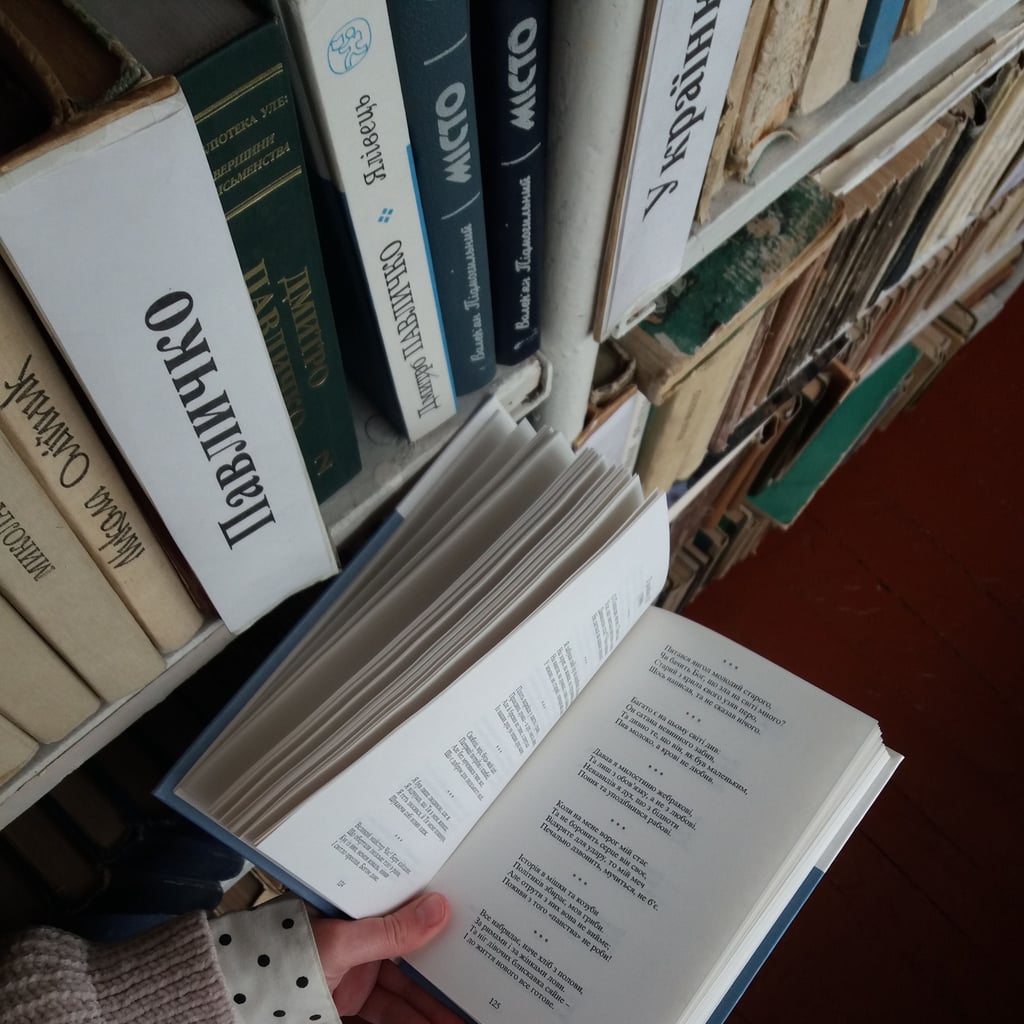
Photo: Liudmyla Honcharova on Pexels. This image illustrates reading beside a bookshelf; it is not a demonstration of specialist book support.
Keep the cup out of the book’s space
The Library of Congress’s public preservation advice says to keep food and drink away from books. It also recommends a simple paper bookmark rather than folded page corners or fastener-style markers.
For a coffee-loving reading corner, treat that as a reason to separate activities. Finish handling the cup before picking up the book, and do not use a closed volume as a coaster or a base for the coffee tray. A decorative tray does not make sharing the same small surface a protective arrangement.
If you cannot give the drink a separate place away from the books, finish the drink first. There is no universal distance in this routine that makes a spill impossible. The useful change is removing the cup from the space where you place and handle the book.
Keep a plain paper bookmark ready. It can live beside the reading seat when not in use so you do not reach for whatever object happens to be on the table. When you pause, mark the page and close the book rather than leaving it face down.
Let the binding set the opening
The Library’s handling guide advises against forcing an open book completely flat and recommends supporting the covers to reduce strain. A book that resists opening is not asking for a heavier object to press it down.
Notice the way you read a tightly bound volume. Avoid folding a cover back just because that leaves one hand free. If you need support for a fragile book, follow specialist guidance for that item rather than improvising weights from objects around the chair.
This is also a useful limit on the setup itself. A reading corner can be comfortable without making every book usable in every position. Choose another suitable reading surface when the volume needs more support than your lap or small table provides.
Leave repairs out of the evening routine
A loose page or damaged cover is a different problem from an inconvenient shelf. The Library of Congress repair guidance warns against self-adhesive tape, glue, rubber bands and leather dressings on collection books. It recommends consulting a conservator for valuable, complicated or worsening damage.
Do not turn a quick shelf adjustment into an unplanned repair. Put the book aside for advice and note what you noticed, such as a detached cover, rather than guessing at the cause or promising that a household product can reverse it.
If the book is borrowed, contact its owner or the lending library before attempting repairs. For a family volume, keep the title and the concern together in a note so another household member understands why it is not in the usual reading stack.
End with a simple return routine
At the end of a session, use a short sequence:
- Mark your place with the paper bookmark.
- Close the book gently.
- Return it to the position chosen for its size and support.
- Leave the reading surface clear for next time.
- Note any problem that needs advice rather than an improvised repair.
For the wider room arrangement, our rental-apartment cozy corner ideas can help you think about the chair and surrounding space. Keep this book-care check separate from decorative styling.
The aim is a corner that welcomes you back to the next chapter. Give the books a considered resting place, handle them with care and leave complicated treatment to the right specialist. The improvement can be as modest as moving the current book off the windowsill and leaving its shelf space ready.
Frequently asked questions
Should I keep reading-corner books on a sunny windowsill?
Choose a storage place away from direct or intense light and environmental extremes. A comfortable position for the reader does not have to be the storage position for the books.
Can I pull a book out by the top of its spine?
The Library of Congress recommends gripping both sides near the middle of the spine, making room with neighboring books, rather than tugging at the top.
Is household tape suitable for repairing a valuable book?
No. The Library of Congress warns against self-adhesive tape on collection books. Consult a conservator about valuable or worsening damage rather than improvising a repair.
Photo credits
Photo (pin 1): Jonathan Borba on Pexels, Pexels License
Photo (pin 2): Jonathan Borba on Pexels, Pexels License
Photo (inline 1): Liudmyla Honcharova on Pexels, Pexels License