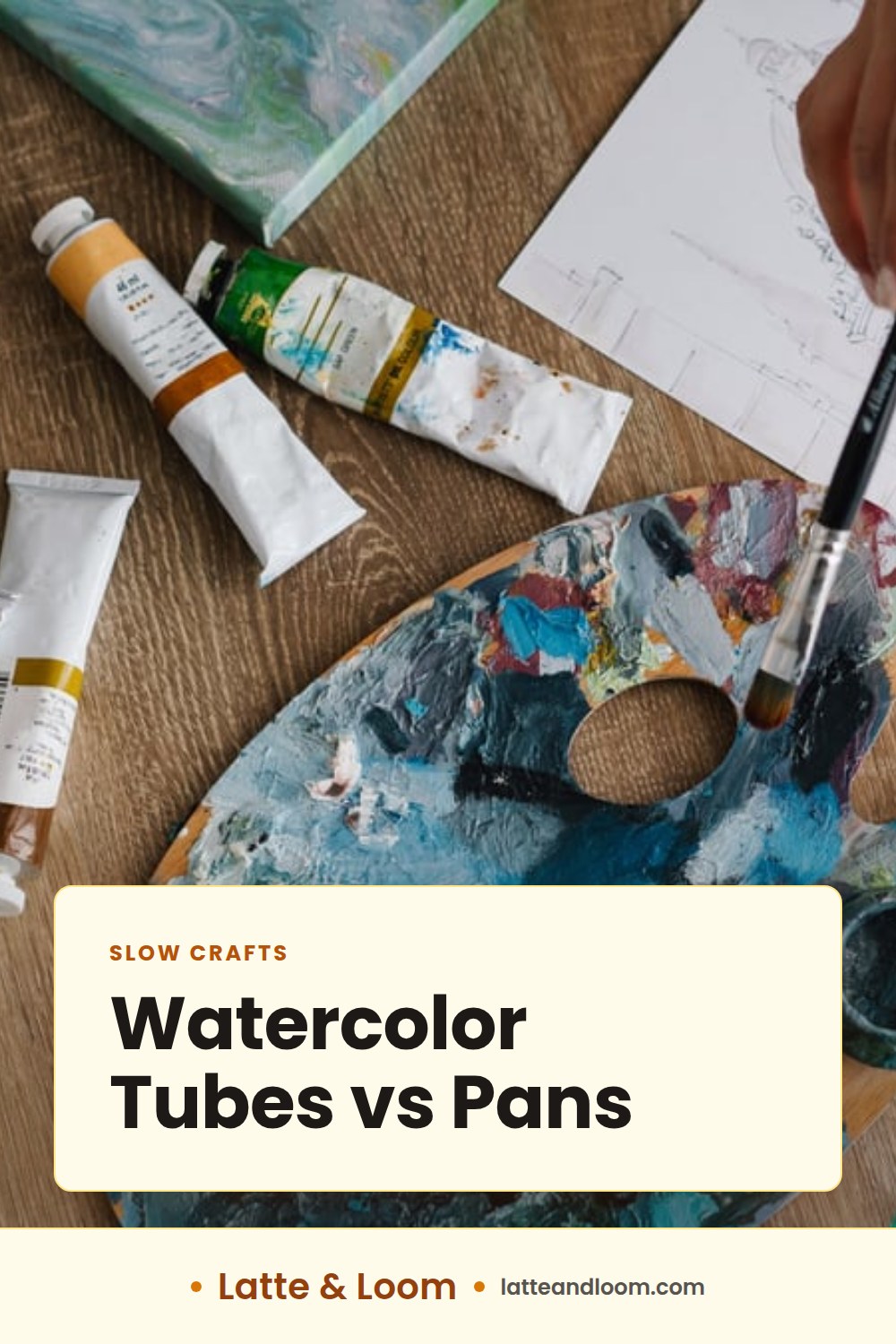
Watercolor tubes and pans contain the same kind of water-soluble painting medium, but they invite different working habits. Pans arrive dry and compact. Tubes deliver moist paint that releases quickly and can be squeezed onto a mixing surface or used to fill an empty pan.
The useful question is not which format is more professional. It is which one supports the way you mix, the size of your paintings, and where you paint. A small pan box can be an easy travel studio, while tubes can make it quicker to mix a generous puddle for a broad wash. Many painters eventually use both.
The quick comparison
| Choose this format first when… | Pans | Tubes |
|---|---|---|
| You want a compact, ready-to-carry set | Strong fit | Possible after filling a palette |
| You often paint small studies or sketchbook pages | Strong fit | Good with a small mixing palette |
| You need a large amount of one mixture quickly | Slower to load | Strong fit |
| You want to select a fresh amount of paint for each session | Limited | Strong fit |
| You prefer a tidy setup with little preparation | Strong fit | Requires opening, squeezing, and wiping caps |
| You want to refill selected colors in a custom box | Buy replacement pans or refill | Tubes can fill suitable empty pans |
These are practical tendencies, not hard rules. A large brush can load from a generous full pan, and a careful painter can carry a few small tubes outdoors. The format changes convenience more than artistic quality.
How pans change the painting rhythm
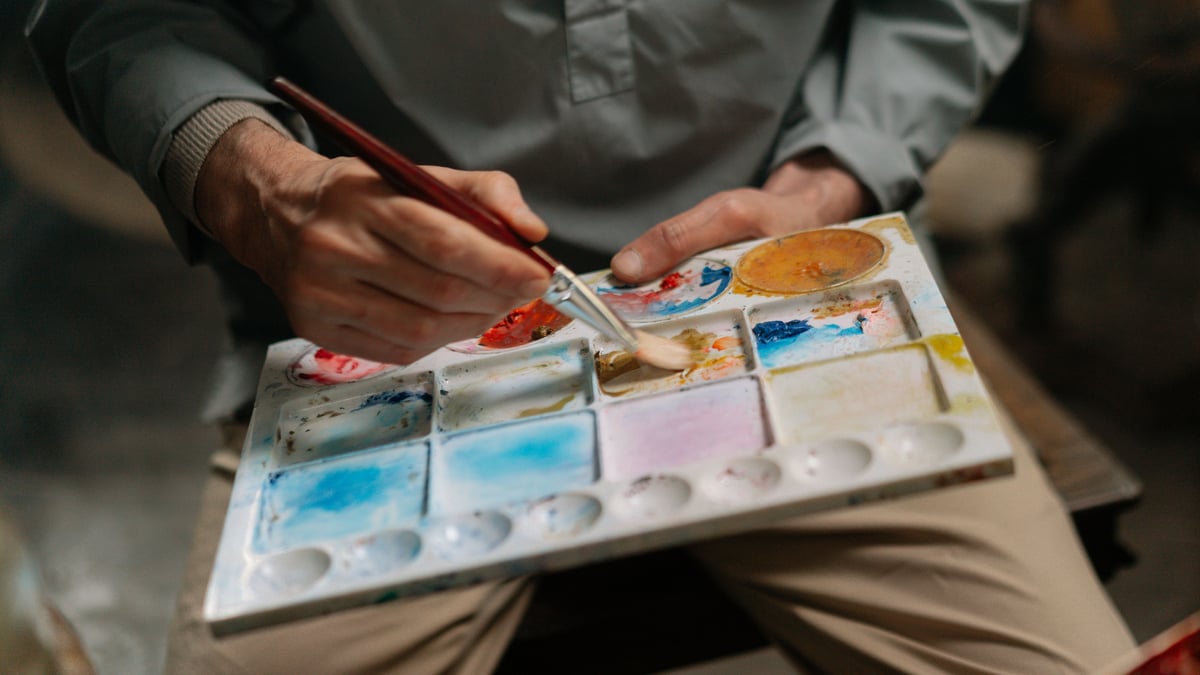
A watercolor pan holds dried paint. You activate it with a wet brush, then carry the released color to a mixing area or directly to the paper. Because the paint is already contained, setup is quick: open the box, add water, and begin.
That simplicity is especially useful for short sessions, travel journals, color studies, and anyone who dislikes managing loose caps. A pan set also makes the available palette visible at a glance. You can learn where each color sits and build a consistent mixing routine.
The tradeoff is loading speed. A tiny half pan can feel restrictive when a broad brush needs a large amount of saturated color. Spritzing the pans with clean water a minute before painting helps soften the surface. Even then, prepare enough mixture before starting a large wash so you do not run out midway.
Keep the pan wells identifiable. Dried neighboring colors can look surprisingly similar, especially dark blues, greens, and earth colors. A small swatch chart attached to the lid is more reliable than guessing.
How tubes change the painting rhythm
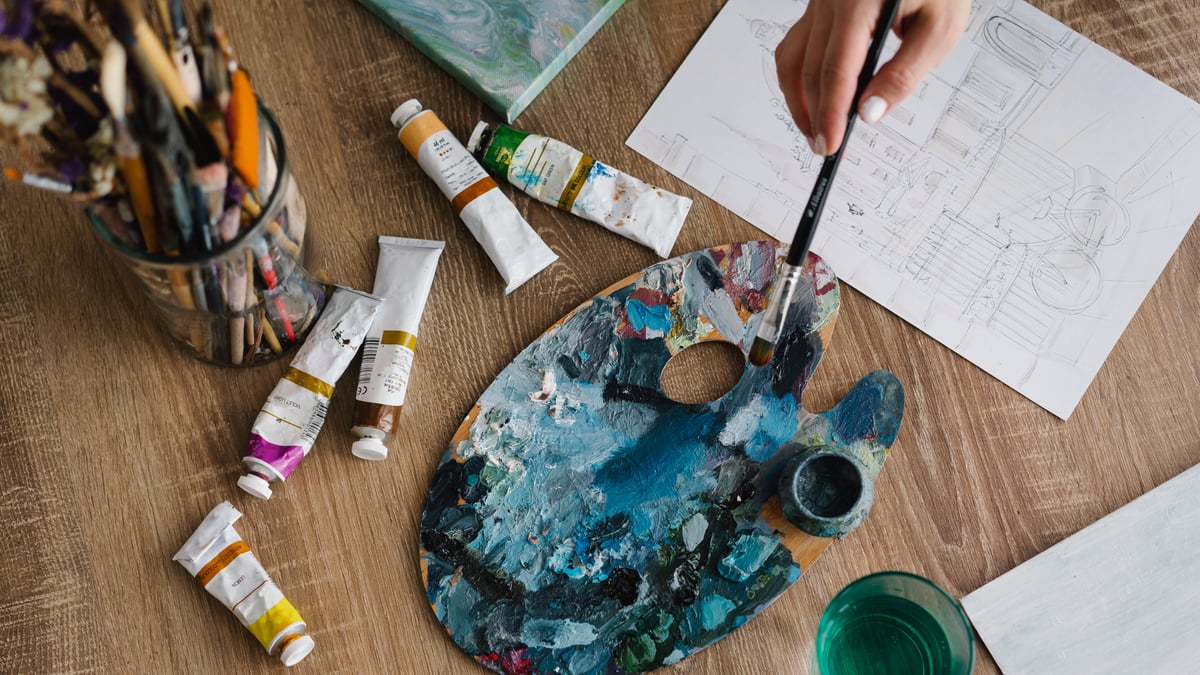
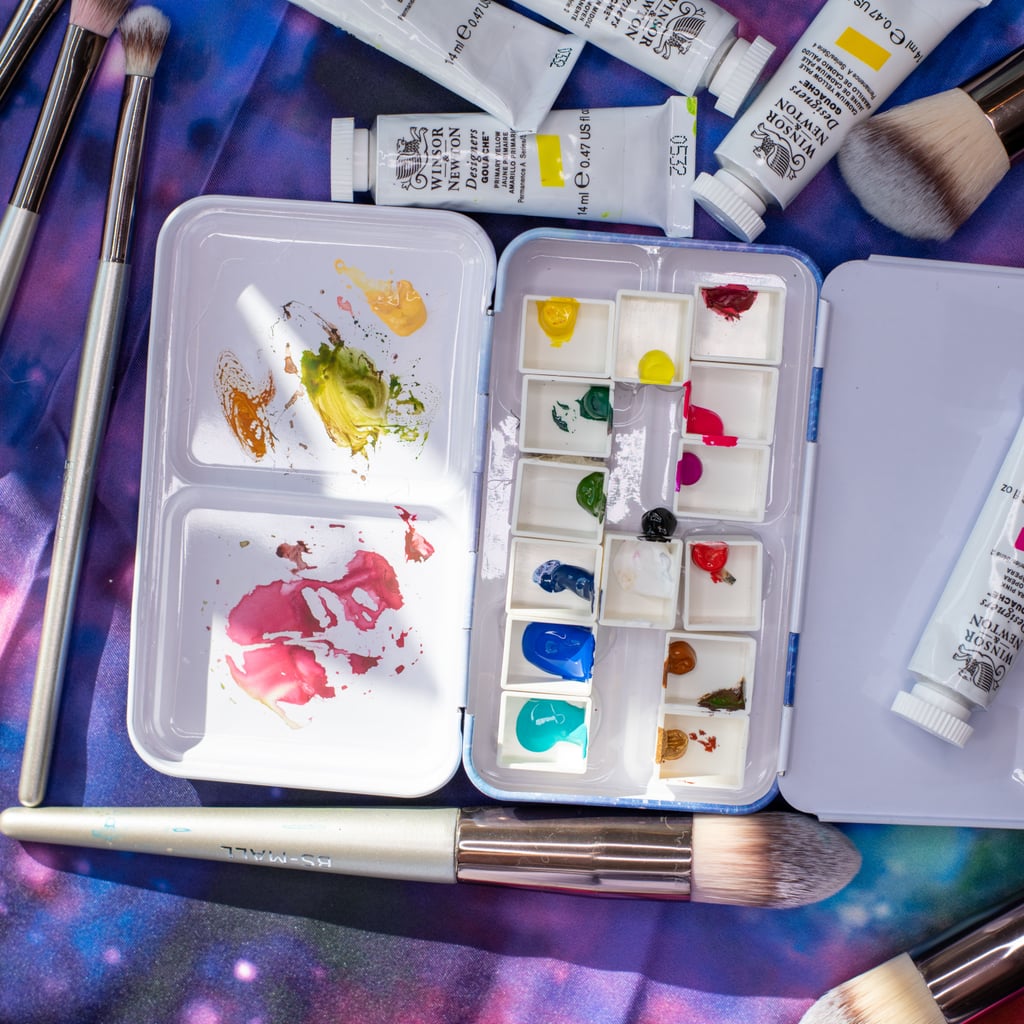
Tube watercolor starts moist, so a small squeeze releases concentrated paint quickly. This is useful for larger paper, bold passages, and any wash that needs a generous, repeatable puddle. You can place separate colors around a mixing palette and control how much fresh paint enters each mixture.
Tubes are also convenient when you use a restricted palette. A few chosen colors take little storage space, while a large premade pan set may include colors you rarely touch.
The extra work is physical. Caps need to stay clean enough to close securely, and the tube should not be crushed near the neck. Squeeze from the lower end rather than folding the tube sharply. Wipe paint from the threads before replacing the cap. If you are working outdoors, keep loose caps in a shallow tray or open case so they cannot roll away.
Fresh tube paint is concentrated. Start with less than you think you need, then add more. The goal is a useful mixing puddle, not a mound of paint that dries before you reach it.
A six-swatch test using colors you already own
You do not need to buy two complete sets. Compare one pan color with one tube color that you already have, even if the pigments differ. The test is about handling and setup.
- Activation time: Add two drops of clean water to the pan. Put a rice-grain amount of tube paint on the palette. Time how long each takes to become a smooth, brushable mixture.
- Small mark: Paint five narrow lines with each format. Notice whether loading the brush feels easy and repeatable.
- Large wash: Mix enough paint for two equal rectangles. Record which format made it easier to prepare the full amount before touching the paper.
- Color adjustment: Add a little more pigment to each puddle. Compare how precisely you can deepen the mixture.
- Cleanup: Clean the palette, close the tube, and tidy the pan box. Note the time and any frustration.
- Next-day return: Rewet the dried mixtures. Observe how readily each becomes usable again without claiming that one swatch represents every brand or pigment.
Write down where you normally paint and the size of your usual paper. A format that wins a tabletop speed test may not be the one you want in a backpack.
Build a small palette before a large one
A limited palette is easier to learn than a crowded box. Start with colors that can mix a useful range for your subjects. The exact pigments depend on your preferences, but every color should have a job.
For each candidate color, make a full-strength swatch, a diluted wash, and two mixtures with colors already in the set. If a new paint duplicates results you can mix easily, leave that slot empty for now. Empty space is useful: it gives you room to discover what is actually missing.
Label pans with the color name and pigment information from the manufacturer. If you fill empty pans from tubes, let the paint settle in a clean, level place and follow the paint maker’s current instructions. Different formulations can dry and rewet differently, so do not assume one filling method suits every product.
A small chart can include:
- Color name and pigment code
- Brand and range
- Pan, half pan, or tube
- A dark-to-light wash
- Two useful mixtures
- Date added to the palette
This record matters more than a perfectly coordinated box. It helps you replace the right color and understand why a mixture worked.
Can tube paint go into pans?
Many artists squeeze tube watercolor into suitable empty pans to create a customized portable set. Daniel Smith, for example, publishes a current tutorial for filling half pans and describes using tubes for a travel or studio palette. Follow the instructions for the exact paint range you own rather than treating all brands as identical.
Fill clean pans, keep color labels with them, and allow the paint to settle where dust cannot land on the surface. Avoid overfilling, which can make the lid messy and reduce mixing space. If a color cracks or shrinks after drying, that does not automatically mean it is unusable; test how it rewets and adheres before deciding.
Do not add unrelated household ingredients to change the paint unless the manufacturer recommends them. Altering the binder can affect handling and preservation.
Care habits for either format
Use clean water when activating paint so you do not contaminate a light color with a dark mixture. Let a pan box dry before closing it for storage, and keep tube threads clean and caps secure. Store both formats away from excessive heat and moisture.
Brush care matters too. Dried paint near the ferrule changes how a brush loads from either a pan or a tube mixture. After the session, use the watercolor brush care routine so the next comparison begins with a clean, properly shaped brush.
A practical choice
Choose pans first if you value portability, quick setup, and small controlled sessions. Choose tubes first if you regularly mix larger puddles, paint at a larger scale, or want to choose a fresh amount for each session.
If both descriptions sound familiar, use a hybrid setup: a compact pan box for your core colors and a few tubes for colors you consume quickly or need in larger washes. Test the workflow, not the reputation. The better format is the one that keeps paint ready, mixtures deliberate, and your attention on the painting.
Frequently asked questions
Are watercolor tubes better quality than pans?
Format alone does not determine quality. Compare the maker's range and pigment information, then choose the handling and setup that fit your work.
Can tube watercolor be put into empty pans?
Many artists do this, but follow the current instructions for the exact paint range because formulations can dry and rewet differently.
Which format is easier for travel?
Pans are usually the tidier ready-to-carry option, while a few small tubes can also travel well when caps and mixing space are managed carefully.
Photo credits
Photo (pin 1): Mikhail Nilov on Pexels, Pexels License
Photo (pin 2): Mikhail Nilov on Pexels, Pexels License
Photo (inline 1): Lydia Love on Pexels, Pexels License