
AI disclosure: This article was drafted with AI assistance and reviewed by our editor before publishing. Learn more.
Co-fermented coffee batch consistency is not automatic. It requires tight control and transparent data across fermentation, roasting, and origin. To claim true consistency you need repeatable cup profiles within a defined tolerance across multiple lots, plus per-batch records: cupping scores, fermentation conditions, roast records, and origin details.
Direct answer: what consistency looks like in co-fermented coffees
Consistency across co-fermented coffees means the same sensory results—within a pre-set tolerance—repeated across production-scale batches. If you don’t collect standardized, per-batch data (cupping scores, fermentation logs, roast records, origin notes), any consistency claim is qualitative, not provable.
A robust claim requires:
- Repeatable cup profiles within a predefined tolerance, agreed by quality, roasting, and commercial teams.
- Data recorded per batch: cupping scores with standardized descriptors, fermentation parameters, roast curves, and origin identifiers.
What co-fermentation is and why it complicates consistency
Co-fermentation combines multiple varieties or lots in a single fermentation
Mixing two or more lots in a single fermentation creates interaction effects. Sugars, acids, and microbial metabolites mingle and form compounds you won’t get from the component lots alone. The result can shift acidity, sweetness, and aroma in non-linear ways.
Microbial communities and environment are dynamic
Even with the same mix, wild yeasts and bacteria vary with ambient temperature, harvest timing, and moisture. Biological variables are sensitive; the same recipe on different days can produce different metabolites and different cups.
Roast and post-fermentation handling can amplify or mask differences
Small fermentation differences can be amplified by roast choices or erased by darker profiles. Drying, storage humidity, and resting time after roast will also alter perceived acidity and volatility. That makes it hard to say whether a cup difference came from fermentation, roast, or storage.
What data proves or disproves batch-to-batch consistency
To move from claims to proof, collect per-batch data across these domains:
- Cupping scores and standardized sensory notes (same cupping protocol, blind cupping).
- Fermentation parameters: start time, duration, temperature curve, moisture checkpoints, pH readings, inoculation strategy (if any).
- Roast records: time/temperature data, batch size, profile name, and date roasted.
- Origin variables: farm, lot number, subplot if applicable, harvest date/year, drying method.
- Co-ferment recipe: exact proportions by weight and any deviation log.
- Storage: drying curve, humidity, resting time after roast, and packaging date.
A per-batch data schema should include a unique batch ID, origin details, fermentation log, roast file, cupping file, and tasting notes. This lets you compare like with like.
A practical framework to assess consistency (5-step method)
I use this five-step method when I want to know whether multiple co-fermented lots are really the same. Follow the steps, keep records, and compare with a tolerance model.
- Define consistency. Decide acceptable variance before tasting and document it. Your tolerance should be agreed by commercial, quality, and roasting stakeholders.
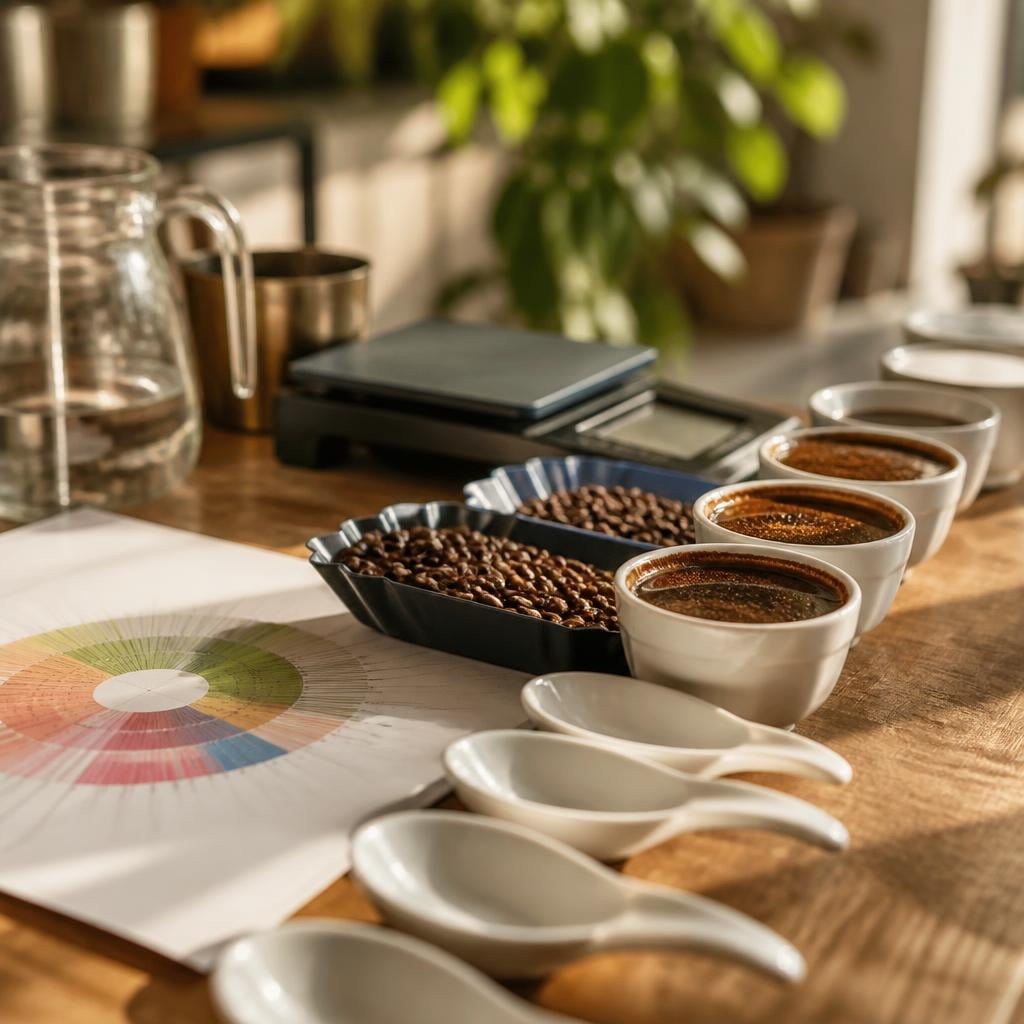
- Standardize the data you collect. Use the same grinder, dose, water temperature, and cupping method. Roast every comparison sample to the identical profile and cup blind. I keep a single cupping form and follow identical preparation for every comparison.
- Document fermentation parameters. Log start time, duration, temperature curve (record hourly or continuous), moisture checkpoints, and whether you used inoculants. Record pH at set intervals—start, middle, end.
- Track origin and processing. Record farm, lot, harvest date, drying method, and the exact co-ferment recipe (ratios and any changes).
- Analyze with a tolerance model. Compute mean, variance, and standard deviation for cupping scores and attribute ratings across your sample. Flag batches outside the tolerance for investigation.
What roasters and producers can do to move toward true consistency
- Lock down the recipe. Use fixed proportions by weight and document fermentation duration. If you change the mix between batches, you cannot claim the same product.
- Standardize the roast. Use the same roast curve, batch size, and cooling routine when comparing lots. Small changes in development time or end temperature (even 10–20 °F) can alter perceived acidity and sweetness.
- Institute batch-level cupping. Cup every co-fermentation batch with one protocol and one form.
- Share data openly. Publish fermentation timelines, moisture targets, and origin details alongside tasting notes so buyers can interpret variability.
- Accept trade-offs. Biological fermentations will always show some variation. Set realistic tolerance windows and document them for customers.
If you need practical cupping discipline, I write about my tasting routine and how I use consistent grind and dose in What I’ve Been Brewing This Week. If you want notes on how gear affects repeatability, see Why Owning the Best Gear Made Me a Better Barista. For standardizing brews when testing, use the Brew Ratio Calculator and log cost impacts in the Cost Per Cup Calculator.
Special cases: how variables can mask or reveal inconsistency
Roast influence
Changing development time or end temperature can mimic fermentation-driven flavors. If your roast profile isn’t fixed, you won’t know if differences come from fermentation or roast.
Origin variability
Two lots from the same farm but different subplots or harvest dates can behave differently during co-fermentation. Track subplot and harvest timing.
Batch size effects
Large fermentations tend to average extremes; small experimental batches show more variability. If you want to prove industry-release consistency, test at full production batch size and log the mass and surface area of the ferment.
What the current notes imply about data availability
The notes I worked from show we don’t have concrete, independently verifiable data on co-fermented batch-to-batch consistency. A credible analysis needs per-batch cupping scores, fermentation logs (duration, inoculation, moisture, temperature), roast files, origin details, and confirmation that co-ferment recipes were held constant. You also need a documented definition of consistency and a sample size for comparison.
If you publish batch data, provide a per-batch CSV with identifiers, origin details, co-ferment recipe, fermentation parameters, roast records, cupping results, and standardized sensory descriptors. Include your tolerance definition and an analysis showing means and variance.
Practical checklist before you call a co-ferment ‘consistent’
- Recipe fixed and recorded by weight.
- Ferment logs for every batch (time, temp, moisture, pH).
- Roast curves exported and stored per batch.
- Blind cupping records with standardized form.
- Agreed tolerance and a statistical review across production-scale batches.
Co-fermentation can produce interesting, unique cups. It also requires more rigorous data discipline than single-lot processing if you want to claim repeatability.
Watch the short version
Frequently asked questions
What counts as 'consistent' in a co-fermented coffee, and over how many batches do we need to measure it?
Consistent means repeatable sensory results within a predefined tolerance agreed by stakeholders. Measure multiple production-scale batches; the exact number depends on your tolerance definition and product risk, but plan to analyze enough batches to compute mean and variance.
What data should I collect on each batch to assess consistency effectively?
Collect per-batch cupping scores and standardized sensory notes, fermentation parameters (start/end time, temperature curve, moisture, pH, inoculant), full roast records (time/temperature, batch size), origin details (farm, lot, harvest), the co-ferment recipe by weight, and storage/resting time.
How much variation is acceptable before we call a batch inconsistent, and who defines it?
Acceptable variation is a commercial decision. The roast team, quality manager, and commercial stakeholders should set thresholds that match your brand promise and market positioning.
Do changes in roast level or origin alone explain most differences, or is fermentation the bigger driver?
All three matter. Roast can reveal or mask fermentation differences; origin provides raw-material variability; fermentation often drives unique aromatic and acid profile changes. You must hold other variables constant to isolate fermentation effects.
If I want to publish batch-to-batch consistency data, what format should that data take?
Publish a per-batch CSV or table with batch ID, origin details, co-ferment recipe, fermentation parameters, roast records, cupping results, and standardized sensory descriptors. Include your consistency definition, sample size, and statistical analysis (means, variance, SD).
Tools and gear mentioned
Free tool
Coffee Brew Ratio Calculator
Coffee-to-water for pour-over, French press, AeroPress and espresso.
Open calculatorFree tool
Cost Per Cup Calculator
What your home coffee really costs versus the café.
Open calculatorFree tool
Coffee Station Budget Planner
Pick a space and a budget tier and get an itemised shopping list.
Open calculatorFree tool
Caffeine Calculator
Caffeine per drink and your daily total against the 400 mg guideline.
Open calculator