
AI disclosure: This article was drafted with AI assistance and reviewed by our editor before publishing. Learn more.
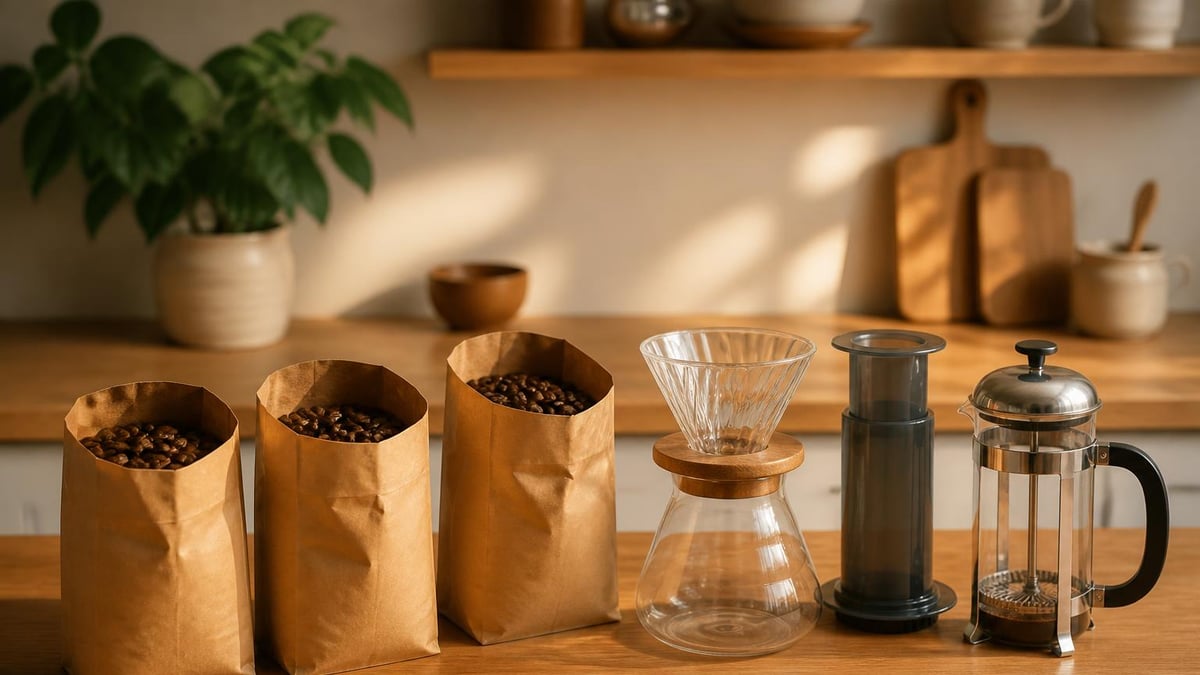
I brewed three beans this week—an Ethiopian Yirgacheffe (washed, light), a Colombian Palacio (medium), and a Brazil Santos (dark)—because they show clear differences at home and pair with the three methods I use most: V60, Aeropress, and French press. Below I list exactly how I brewed each, what I tasted, how many 15 g cups a 12 oz (340 g) bag yields (about 22), and a simple way to calculate cost per cup. Use the Brew Ratio Calculator if you want to scale doses or water.
Bean-by-bean highlights: what I chose and how I brewed them
Ethiopian Yirgacheffe Washed — light roast, delicate florals
- Roast level: light
- Dose: 15 g
- Water: 260 ml, 94°C (201°F)
- Grind: medium-fine (similar to table salt)
- Method: V60
- Time: 30 s bloom with 30 ml, then pulse pours to finish at 2:00–2:20 total
- Expected cups per 12 oz (340 g) bag: about 22 (340 ÷ 15 = 22.6)
Tasting notes: immediate jasmine and bergamot aroma, bright lemony acidity, thin-to-medium body, clean tea-like finish. This one rewards precise pouring; too coarse and the florals fade, too fine and it gets harsh.
Colombian Palacio — balanced, chocolate-cocoa finish
- Roast level: medium
- Dose: 15 g
- Water: 260 ml, 93–94°C (199–201°F)
- Grind: medium (slightly coarser than the Yirgacheffe)
- Method: V60 (or Aeropress for a stronger cup)
- Time: 30 s bloom, steady pour to 2:20–2:40
- Expected cups per 12 oz bag: about 22
Tasting notes: brown-sugar sweetness upfront, milk-chocolate mid-palate, medium body, clean cocoa finish with low citrus lift. Works well as black coffee or with a splash of milk.
Brazil Santos — dark roast, roasted-nut sweetness
- Roast level: dark
- Dose: 18 g for French press (or 15 g for Aeropress)
- Water: 300 ml for French press, 94°C (201°F)
- Grind: coarse for French press; medium-fine for Aeropress
- Method: French press (or Aeropress inverted for quick cups)
- Time: French press 4:00 minutes; Aeropress 1:30 total (inverted, plunge at 1:15)
- Expected cups per 12 oz bag: about 19 if using 18 g doses (340 ÷ 18 = 18.9), about 22 if using 15 g doses
Tasting notes: roasted-nut, toasted bread crust, low acidity, heavier mouthfeel, lingering bittersweet chocolate. Good for mornings when I want something round and forgiving.
| Bean | Roast | Best method I used | Dose (g) | Water (ml) | Brew time | Cups per 12 oz bag |
|---|---|---|---|---|---|---|
| Ethiopian Yirgacheffe (washed) | Light | V60 | 15 | 260 | 2:00–2:20 | ~22 |
| Colombian Palacio | Medium | V60 / Aeropress | 15 | 260 | 2:20–2:40 | ~22 |
| Brazil Santos | Dark | French press / Aeropress | 15–18 | 260–300 | 1:30 (AP) / 4:00 (FP) | ~19–22 |
How I select beans this week: criteria that matter at home
Origin and processing: brightness vs. sweetness
I pick one bright/washed (Ethiopia) to show floral and citrus notes, one balanced/washed or pulped natural (Colombia) for sweetness and cocoa, and one dark/natural or traditional (Brazil) for low-acid, heavier body. Processing matters: washed tends to be cleaner and brighter; naturals and some pulped naturals will feel fruitier or heavier.
Roast level and grind compatibility with my methods
Light roasts show best in pour-over (V60) with finer, controlled pours. Medium roasts split well between pour-over and Aeropress. Dark roasts are forgiving in French press or Aeropress inverted. I choose beans whose roast level pairs with the grind and brew method I plan to use: V60 needs a consistent medium-fine, French press needs a consistent coarse.
If you’re choosing a grinder, see my brief comparison of Baratza Encore vs Timemore C3 for what I recommend as a first grinder.
Price per bag and how many cups I expect to extract
Instead of listing prices (they vary), I use this rule: a 12 oz (340 g) bag divided by my usual dose gives cups per bag. Example counts:
- 15 g dose → 340 ÷ 15 ≈ 22 cups
- 18 g dose → 340 ÷ 18 ≈ 19 cups
Cost-per-cup formula: Cost per cup = bag price ÷ number of doses. If you want a quick calculator, try the Cost Per Cup Calculator.
Brewing at home: methods, temps, and timing I actually use
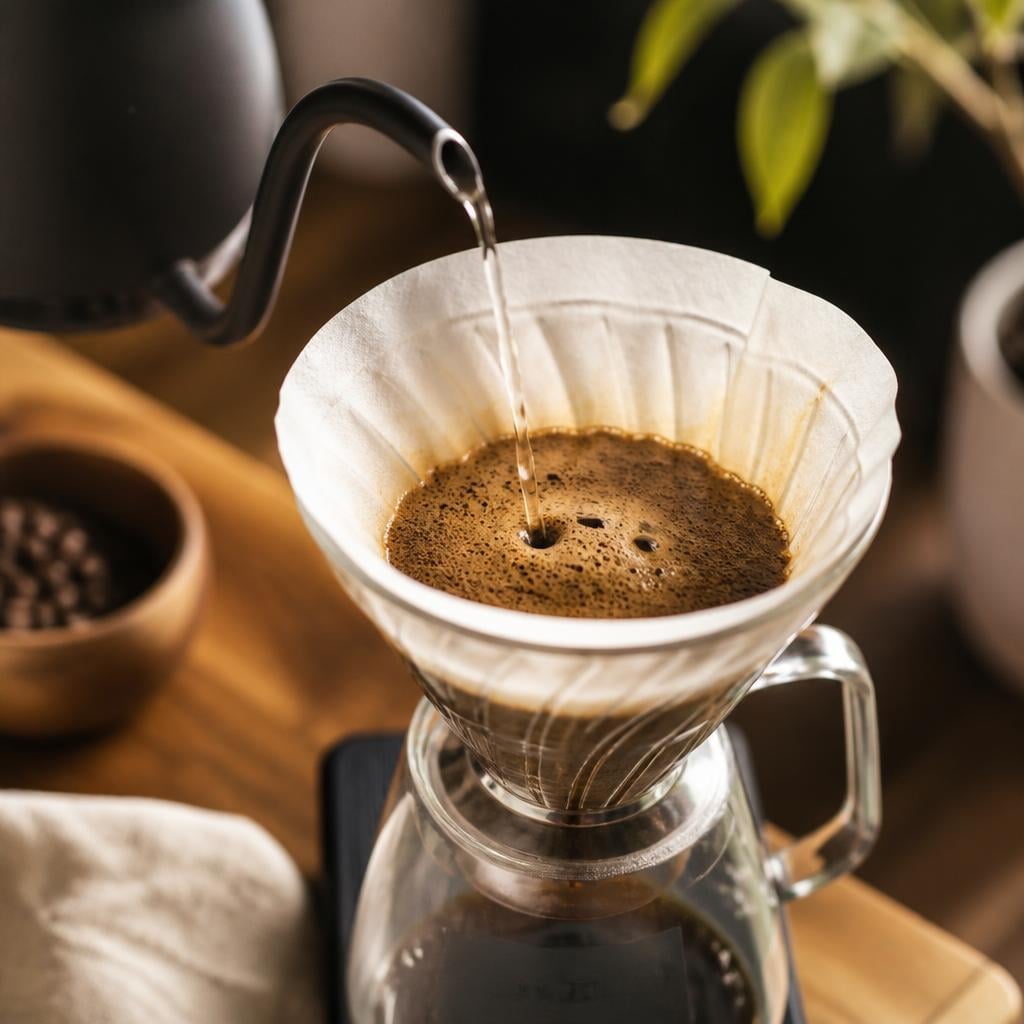
V60 with a 15-gram dose and 260 ml water
- Heat water to 94°C (201°F).
- Rinse paper filter and discard rinse water.
- Add 15 g coffee, start a 30 s bloom with 30 ml water.
- At 30 s, pour to 130 ml, then gently top to 260 ml by 1:30.
- Aim for 2:00–2:20 total drawdown.
This gives clarity and highlights acidity and aromatics. If coffee tastes thin, grind slightly finer or increase dose by 1–2 g.
Aeropress for quick, clean cups
- Inverted method: 15 g coffee, 200–220 ml water at 93°C (199°F), stir 10 s, steep 1:15, flip and plunge slowly.
- For a stronger, espresso-like cup use 15 g, 85 ml water, 0:45–1:00 steep, hard plunge.
Aeropress is fast and forgiving. Adjust water and time to control strength. If you need a fast, tidy setup in a small space, my corner plan for tight kitchens may help: Apartment Coffee Station Ideas.
French press for a full-bodied finish
- Dose: 18 g coffee, 300 ml water, water at 93°C.
- Add water, stir once, steep 4:00 minutes, plunge gently and serve within 2 minutes to avoid over-extraction.
French press highlights body and roast character. Use coarser grind to avoid sludgy cups.
Tasting notes: what my palate picked up this week
Ethiopian Yirgacheffe Washed: aroma, acidity, and finish
Aroma: jasmine and lemon rind. Acidity: bright, tea-like, high. Finish: clean with a floral aftertaste that fades quickly. Texture: light, almost tea-like. Best when brewed in V60 at 94°C with a 15 g dose.
Colombian Palacio: body, sweetness, and aftertaste
Body: medium, syrupy when brewed slightly finer. Sweetness: brown sugar and baked apple. Aftertaste: cocoa dusting and a mild caramel finish. Versatile: works black or with milk.
Brazil Santos: mouthfeel and roast notes
Mouthfeel: thick, rounded. Roast: toasted nuts, bread crust, bittersweet chocolate. Aftertaste: pleasant roast bitterness that lingers. Pairs with breakfast foods or milk.
Cost, value, and how long beans stay fresh enough to brew
Pricing per 12 oz bag and cost per cup
I don’t list specific retail prices because they vary by roaster and region. To compute cost yourself:
- Bags are typically 12 oz (340 g).
- Cups per bag with a 15 g dose: about 22.
- Cost per cup = bag price ÷ 22.
If you want to track set-up costs and ongoing spend, the Coffee Station Budget Planner helps map gear and beans to a monthly figure.
Freshness window and storage tips
- Best window: 7–21 days after roast to catch peak flavors; still good up to 4 weeks depending on roast and storage.
- Storage: opaque, airtight container at room temperature in a cool spot away from sunlight. I keep only one open bag at a time and transfer the rest to airtight tins.
- Avoid frequent opening and avoid the fridge (moisture, odors).
When to rotate beans to keep flavors honest
Rotate when: flavors flatten, acidity drops completely, or roast notes take over everything (after ~4 weeks). If a bag sits open for more than 3 weeks and tastes dull, move it to the “brew-first” pile or use it for milk drinks where roast dominance isn’t as obvious.
Rotating stock: how I organize beans week to week
Cup rotation plan
I rotate by method and flavor profile:
- Week 1: Bright (V60) — Ethiopian
- Week 2: Balanced (V60/Aeropress) — Colombian
- Week 3: Dark (French press) — Brazil
This gives variety and uses beans while fresh.
Stale vs. fresh window checks
- Fresh: vibrant aromatics within 7–14 days of roast.
- Near-stale: flavors flatten, but usable in milk drinks.
- Stale: cardboard/woody or no aroma; time to compost.
What to brew when you’re low on time
If you’re short, use Aeropress inverted with 15 g and 200 ml at 93°C, 1:15 steep. It’s fast, forgiving, and highlights the bean without elaborate pouring.
If you like a small craft touch around your coffee corner, I use handmade coasters and simple shelves; see my Air-Dry Clay Coasters for Your Coffee Corner for an easy project.
Watch the short version
Frequently asked questions
How do you decide which bean to feature first each week?
I use what I opened most recently and what I want to taste clearly. If nothing is freshly roasted, I start with the light, bright bean on week one (V60) and move through medium and dark. That way the beans that benefit from milk or immersion wait their turn.
Can these exact parameters work with a different grinder or kettle?
They’re starting points. Different grinders change particle distribution, so tweak grind size: finer if extraction is fast or weak, coarser if slow or bitter. Any kettle that reaches stable temps (or a thermometer) works. For grinder guidance, see the Baratza vs Timemore comparison linked above.
What if I don’t have a V60 or Aeropress—what’s a good substitute?
Substitute a Chemex or Melitta cone using the same dose and pour timing; expect a slightly different body. If no pour-over at all, an Aeropress inverted or a small French press will get close to similar clarity with adjusted doses and times.
How should I store beans to preserve flavor between weeks?
Keep beans in an opaque, airtight container at room temperature in a dark cupboard. Only open the container when you’re about to grind. Don’t use the fridge for daily-use beans—moisture and odors will harm flavor.
What signs tell me a bean isn’t worth keeping after a few brews?
Aroma disappears, flavor is flat or cardboard-like, acidity is gone or unpleasant, or the coffee tastes stale across methods. Use those beans for cold brew or cooking if you don’t want to waste them.
Tools and gear mentioned
Free tool
Coffee Brew Ratio Calculator
Coffee-to-water for pour-over, French press, AeroPress and espresso.
Open calculatorFree tool
Cost Per Cup Calculator
What your home coffee really costs versus the café.
Open calculatorFree tool
Coffee Station Budget Planner
Pick a space and a budget tier and get an itemised shopping list.
Open calculatorFree tool
Caffeine Calculator
Caffeine per drink and your daily total against the 400 mg guideline.
Open calculator