


AI disclosure: This article was drafted with AI assistance and reviewed by our editor before publishing. Learn more.
Iced lattes and iced coffees differ mainly in their coffee base and milk ratio. An iced latte is espresso plus a larger proportion of cold milk and ice. An iced coffee is brewed coffee poured over ice and usually has less milk or none. That changes flavor, texture, and how you make each at home—espresso gives an iced latte a concentrated, creamy profile; brewed coffee makes iced coffee brighter and more diluted unless you brew it stronger or use cold brew.
Introduction: why the difference matters in everyday orders
Knowing the difference saves you from getting the texture or strength you didn’t want. If you want a creamy, smooth drink with a gentler coffee punch, order or make an iced latte. If you want something brighter, longer-sipping, and usually cheaper, go for iced coffee.
What you’ll learn: key ingredient and method distinctions
- Iced latte: espresso + cold milk + ice. Concentrated coffee flavor with a creamy mouthfeel.
- Iced coffee: brewed coffee + ice (milk/sweetener optional). Lighter, more tea-like mouthfeel unless you brew stronger or use cold brew.
- Practical home methods, timing, and small tweaks to make drinks stronger, milkier, or faster.
If you want help dialing ratios, try the Brew Ratio Calculator for batch and single-serve math.
Why understanding the difference saves time and money
Ordering precisely what you want avoids extra runs to the café. At home, the right method saves ingredients and gives you a drink you’ll finish—less waste. Espresso-based drinks use more milk per ounce of coffee, so they usually cost more in cafés and take a bit more effort at home.
What is an iced latte?
An iced latte is espresso mixed with cold milk and poured over ice. The espresso provides concentrated coffee flavor; the milk softens bitterness and creates a smooth mouthfeel.
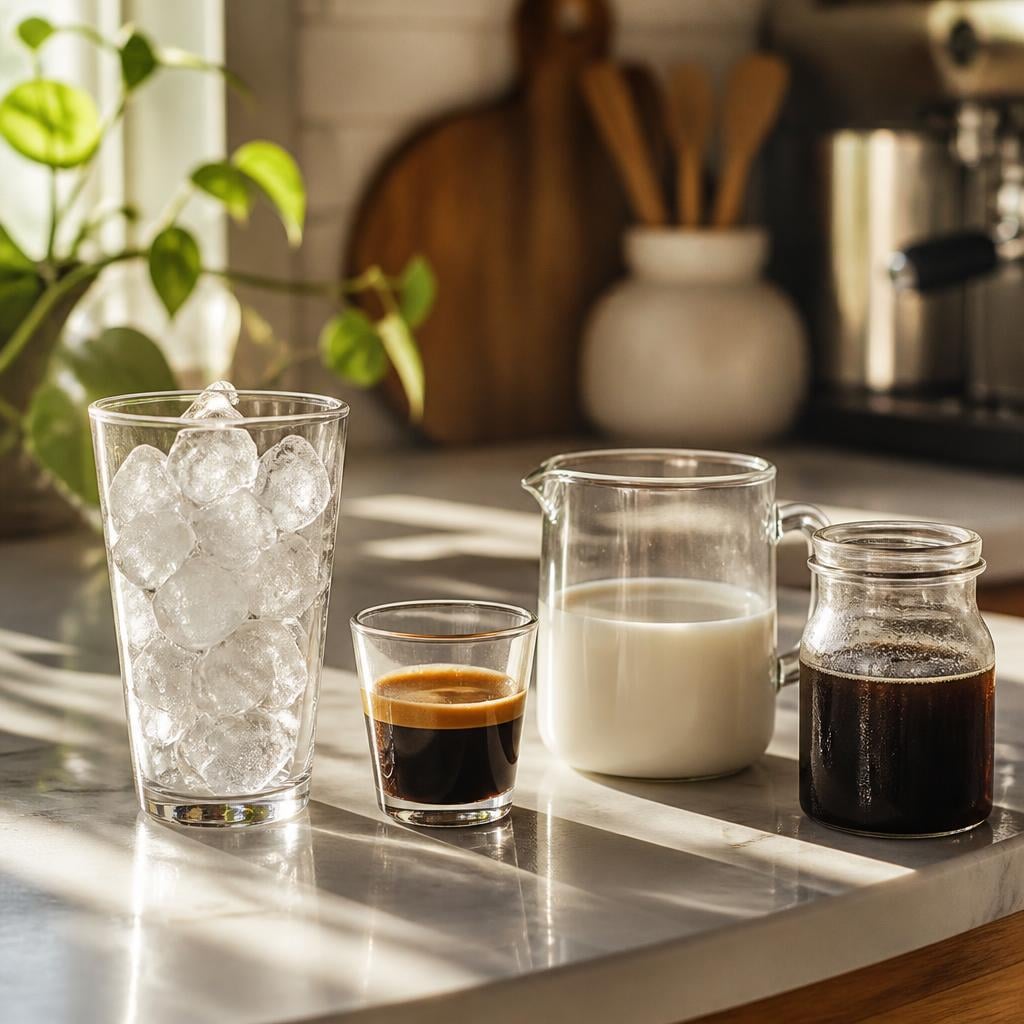
Core ingredients (espresso, milk, ice)
- Espresso: one or two shots is common. Two shots (about 2 ounces) is my usual for a 12- to 16-ounce cup.
- Milk: add enough cold milk to reach the creaminess you want — roughly 6–10 ounces for a 12–16 ounce drink. Whole milk feels creamier; lower-fat or plant milks vary by brand.
- Ice: fill the cup to chill the drink. Larger cubes melt slower and cut dilution.
Typical ratios and serving sizes
A simple starting point for a 12-ounce glass:
- Pull 2 shots espresso (about 2 oz total).
- Fill the glass two-thirds with ice.
- Add 8–9 ounces cold milk.
Adjust by taste: more espresso for punch, more milk for creaminess. If you change cup size, scale the shots and milk — the Brew Ratio Calculator helps with exact scaling.
What is iced coffee?
Iced coffee is brewed coffee poured over ice. It can be hot-brewed then cooled and poured over ice, or made as cold brew (long, cold extraction). Milk and sweetener are optional.
Core ingredients (brewed coffee, ice, optional dairy or sweeteners)
- Brewed coffee: for hot-brew over ice, many people make a slightly stronger pot to compensate for dilution.
- Ice: fills the rest of the cup; pouring hot coffee over a lot of ice will dilute unless you start stronger or use chilled coffee.
- Dairy/sweetener: add to taste. Simple syrup mixes better than granulated sugar in cold drinks.
Cold-brew methods and steep times vary. I usually make a concentrate or a ready-to-drink batch and keep it in the fridge for 4–7 days.
Common serving styles and variations
- Hot-brew over ice: quick, but expect some dilution unless you brew stronger or pre-chill.
- Cold brew: smoother and often lower in perceived acidity; plan ahead and batch a jar.
- Iced Americano: espresso diluted with cold water and ice — closer in strength to iced coffee but with espresso flavor.
- Iced coffee with milk: if you add as much milk as a latte, it will feel similar in creaminess, though the coffee base still tastes different.
Key differences in flavor, texture, and ordering
Flavor and texture cues
- Strength and aroma: Espresso in an iced latte gives a concentrated espresso aroma and a fuller coffee hit up front. Brewed iced coffee tastes lighter and spreads more across the sip.
- Body: Lattes are creamier because of higher milk proportion and the emulsions pulled from espresso. Iced coffee is thinner unless you add milk or cream.
- Acidity: Hot-brewed iced coffee often tastes brighter; cold brew tends to taste smoother. Bean origin and roast matter as much as method.
Order and customization tips at cafés
- Want less dilution? Ask for “light ice” or “no ice” and leave milk ratio to your taste.
- Make iced coffee creamier by asking for a splash of milk and simple syrup if you want sweetener that blends.
- Want more punch? Ask for an extra shot in an iced latte, or request a stronger brew or an iced Americano.
If you’re comparing gear or thinking about an espresso setup, I’ve written about why smart coffee machines aren’t as common as you might expect and the trade-offs they bring: Why Aren’t Smart Coffee Machines More Common?. If you’re deciding on a first grinder, this comparison was helpful for my apartment setup: Baratza Encore vs Timemore C3: Which First Grinder?. For small-space coffee stations and a place to keep milk and tools handy, see Apartment Coffee Station Ideas: A 60 cm Corner That Works.
How to make iced latte and iced coffee at home
Below are step-by-step methods I use. Each recipe is single-serve; scale as needed.
-
Iced Latte (my usual approach)
- Pull 2 shots espresso (about 2 oz total).
- Fill a 12–16 oz glass two-thirds with ice (about 8–10 standard cubes).
- Pour espresso over the ice.
- Add 8–9 oz cold milk. Stir once and serve.
-
Quick Iced Coffee (hot-brew over ice)
- Brew coffee a touch stronger than your normal cup (I make 10–20% stronger depending on how much ice I’ll use).
- Fill a glass partway with ice (6–8 cubes).
- Pour coffee over ice. Add milk or simple syrup if you like.
-
Cold Brew (smoother option, planning required)
- Coarse-grind coffee and combine with cold water in a jar. I usually make a batch and adjust strength on the next batch rather than trying to guess the first time.
- Steep 12–18 hours in the fridge.
- Filter and dilute to taste; serve over ice.
A small equipment note: if you’re new to espresso or deciding gear, that grinder comparison I linked above helped me choose a first grinder, and batching cold brew is the simplest way to get consistent iced coffee without an espresso machine.
Equipment, timing, and troubleshooting
- Espresso machine: dial grind and dose until shots taste balanced. If shots taste sour, try finer grind or a slightly higher dose; if bitter, go coarser or reduce extraction time.
- Drip brewer: brew stronger if you’ll pour over lots of ice. The Brew Ratio Calculator is handy for adjusting brew strength and batch sizes.
- Cold brew: if your batch tastes weak, use more coffee or steep longer; if too strong, dilute before serving.
- Ice: freeze leftover coffee in an ice tray to chill drinks without adding water.
Pricing, portability, and trade-offs
Cost expectations
- Cafés: iced lattes usually cost more because of espresso plus more milk. Iced coffee (drip) is typically cheaper.
- Home: espresso needs a machine, stovetop espresso, or an AeroPress hack to approximate. Brewed iced coffee or cold brew costs less per cup if you skip an espresso setup.
What to consider on busy days
- Speed: hot-brew over ice and iced Americanos are fast if you don’t want the milk prep of a latte. Cold brew takes planning but is grab-and-go when stored in the fridge.
- Portability: iced coffee scales easily for a thermos. Lattes need milk measured and kept cold.
- Energy and cleanup: espresso machines use more electricity and take more cleanup time. If mornings are rushed, pre-brewed coffee or cold brew is simpler.
Quick, practical takeaways
- Pick an iced latte when you want a creamy, milk-forward drink with concentrated espresso flavor.
- Pick iced coffee when you want something lighter, easier to batch, and usually less expensive.
- At home: espresso + milk = iced latte. Brewed coffee + ice = iced coffee. Use a stronger brew or cold brew if you don’t want the finished drink watered down.
A simple ordering cheat sheet
| If you want… | Order this | Ask for |
|---|---|---|
| Creamy, milk-forward | Iced latte | Extra espresso if you want more punch; light ice to reduce dilution |
| Strong coffee flavor without milk | Iced Americano or iced coffee | Extra shot or stronger brew |
| Smooth, low-acid | Cold brew over ice | Concentrate diluted to taste |
| Quick and cheaper | Iced coffee (drip over ice) | Brew stronger or ask for light ice |
Watch the short version
Frequently asked questions
Is an iced latte stronger than iced coffee because it uses espresso?
Not automatically. Espresso is concentrated, so a single shot carries more coffee flavor per ounce than brewed coffee. But iced lattes include more milk by volume, which can make the overall drink taste milder unless you ask for an extra shot.
Can iced coffee be as creamy as an iced latte if I add milk or cream?
Yes. Adding the same volume of milk or cream will match a latte’s creaminess. The base coffee will still taste different — brewed coffee and espresso produce different flavor profiles even with identical milk ratios.
Which is faster to make at home?
Quickest to serve: hot-brew over ice or pre-made cold brew. Fast single-serve with espresso: an iced Americano. If you don’t own an espresso machine, hot-brew over ice or cold brew left in the fridge is simplest for mornings.
Are there health or budget differences between iced latte and iced coffee?
Lattes usually have more calories because of milk; black iced coffee or an Americano has near-zero calories without milk or sweeteners. Cafés charge more for lattes because of milk and barista time; at home, drip or cold brew is generally cheaper per cup unless you invest in espresso gear.
How should I ask for a stronger or milder version at a café?
Stronger: request an extra espresso shot (latte) or ask for a stronger brew or extra shot (iced coffee/Americano). Milder: ask for less espresso, more milk, or light ice to keep temperature without immediate strength; for brewed iced coffee, add more milk or a splash of cream.
Tools and gear mentioned
Free tool
Coffee Brew Ratio Calculator
Coffee-to-water for pour-over, French press, AeroPress and espresso.
Open calculator