
AI disclosure: This article was drafted with AI assistance and reviewed by our editor before publishing. Learn more.
Smart coffee machines promise convenience: remote start, saved profiles, voice control. In practice they add cost, moving parts, and software that can fail. In most homes reliability, simplicity, and repeatable flavor beat clever features that need an app, firmware updates, or frequent calibration.
Direct answer: what holds smart coffee machines back from broad adoption
Smart machines offer useful features, but those features raise the price and increase the number of failure points. For many home users the marginal gains—a perfectly timed start, a saved drink profile—don’t outweigh the downsides: higher upfront cost, more maintenance, and the occasional connectivity or software problem.
Cost versus payoff: higher upfront price with unclear long-term savings
- Connected and “smart” devices tend to sit above basic programmable makers in price. Exact bands vary by model and region.
- Real costs go beyond the sticker price: a burr grinder, water filtration and replacement filters, descaling solutions, and occasional service can add up. Use the Cost Per Cup Calculator if you want to see how those numbers matter over time.
- In my experience a simple, well-chosen brewer plus a basic grinder will improve daily coffee more than splurging on advanced automation—especially if you don’t use the smart features regularly. If you’re choosing a first grinder, my comparison of grinders may help: Baratza Encore vs Timemore C3.
Trade-off table
| Factor | Smart machine (connected/automated) | Simpler setup (manual/programmable) |
|---|---|---|
| Typical starting price | Generally higher on average, varies by model and region | Generally lower on average, varies by model and region |
| Maintenance frequency | Often higher (more pumps, valves, sensors, and software) | Often lower (fewer moving parts and simpler internals) |
| Daily convenience | High if features work reliably | High for repeatable, manual routines |
| Reliability risk | App bugs, wifi drops, firmware issues | Fewer failure modes |
| Long-term resale/depreciation | Can be affected by software/support lifecycle | Often steadier if the hardware is simple and durable |
Reliability and maintenance friction
Smart features add components that can fail: pumps, solenoids, sensors, and the electronics that run them. When something goes wrong you may need specific spare parts, a firmware fix, or dealer service. I’ve had a connected machine sit idle while waiting for a software patch; it’s frustrating when your “smart” device prevents you from making coffee.
Maintenance tasks that are easy to forget or complicated on smart machines:
- Descaling and other scale control tasks depend on your water and use; machines in hard-water areas need more attention.
- Cleaning brew groups and grinders depends on design and how often you brew.
- Software updates are occasional and can change behavior or introduce bugs.
If you want the coffee to keep working when you’re busy, simplicity often wins.
Quality control: barista-like consistency is hard to guarantee for all brews
Smart machines often promise repeatable profiles, but consistent results still depend on basics: fresh beans, a correct grind, stable water temperature, and clean equipment.
- Brewing basics—temperature, grind, extraction time, and brew ratio—matter more to taste than automation alone.
- A “smart” recipe can’t fix staled beans, an inconsistent grinder setting, or limescale in a boiler. Those physical variables usually affect taste more than automated tamping or scheduled starts.
- Some bean-to-cup machines do a great job for one style (espresso or lungo), but they don’t always adapt across bean types and roast levels without hands-on tuning.
If you want to sharpen your routine, start with simple, repeatable changes. Use a tool like the Brew Ratio Calculator to keep your ratios consistent.
User experience gaps: app dependence, wifi issues, and calibration needs
Smart features mean you’re dependent on a working app and a stable network. Common UX problems I see:
- App-only controls: small changes require opening an app. If the app is slow or discontinued, the machine can lose function.
- Wifi and pairing: routers change, passwords expire, or the machine drops off the network. Re-pairing can be tedious.
- Calibration drift: temperature sensors and flow meters can need recalibration. That often requires a technical manual or a service center.
If you value pushing a single button and getting the same cup every day, a reliable mechanical interface will usually outlast an app-based one.
Lifecycle and resale: faster tech turnover makes upgrades tempting
Connected devices age faster in consumer perception. When a manufacturer adds new features or a nicer app, owners feel left behind. That creates two problems:
- Shorter usable lifespan in practice: people replace machines more often because of software limits or perceived obsolescence, not because the hardware failed.
- Resale unpredictability: a well-built non-connected machine often holds value because buyers understand the hardware; smart machines can be less desirable secondhand if updates or servers stop.
That matters if you like to buy once and keep equipment for years.
Specialization vs. everyday needs: many home users want simple, repeatable results
Most households want a hot, good-tasting cup with minimal steps. That usually means:
- A consistent grind and a coffee-to-water ratio in a recommended starting range.
- Clean equipment and fresh beans.
- A predictable routine: load beans, press a button, enjoy.
Smart machines add options, but options are valuable only if you use them. For many people, fewer choices and fewer moving parts equal a better daily experience. If you like tools and learning, read what happened when I leaned into better gear: /gear/why-owning-the-best-gear-made-me-a-better-barista/.
Is the extra tech worth it for most homes?
Summary of the value proposition
Smart coffee machines can deliver convenience: remote starts, saved profiles for multiple users, and repeatable recipes. They also bring cost, complexity, and extra failure modes. For a household that values automation and is comfortable with apps, they can be worth it. For most households that want a reliable morning cup, simpler equipment usually gives better value.
When smart features make sense and when they don’t
Smart features make sense if:
- You use remote start or saved profiles often and those features actually save time.
- Multiple people want different presets and you use those presets.
- You’re willing to follow maintenance schedules and accept occasional app hiccups.
Smart features don’t make sense if:
- You want low maintenance and long-term reliability.
- You prefer hands-on tuning or already have a grinder and a routine that works.
- You don’t trust or want to depend on an app or ongoing firmware support.
A practical path to a satisfying daily coffee without hype
If you want a great, low-drama cup every day, follow these steps:
- Pick fresh whole beans and use them while they still taste good. Store in an airtight container out of light.
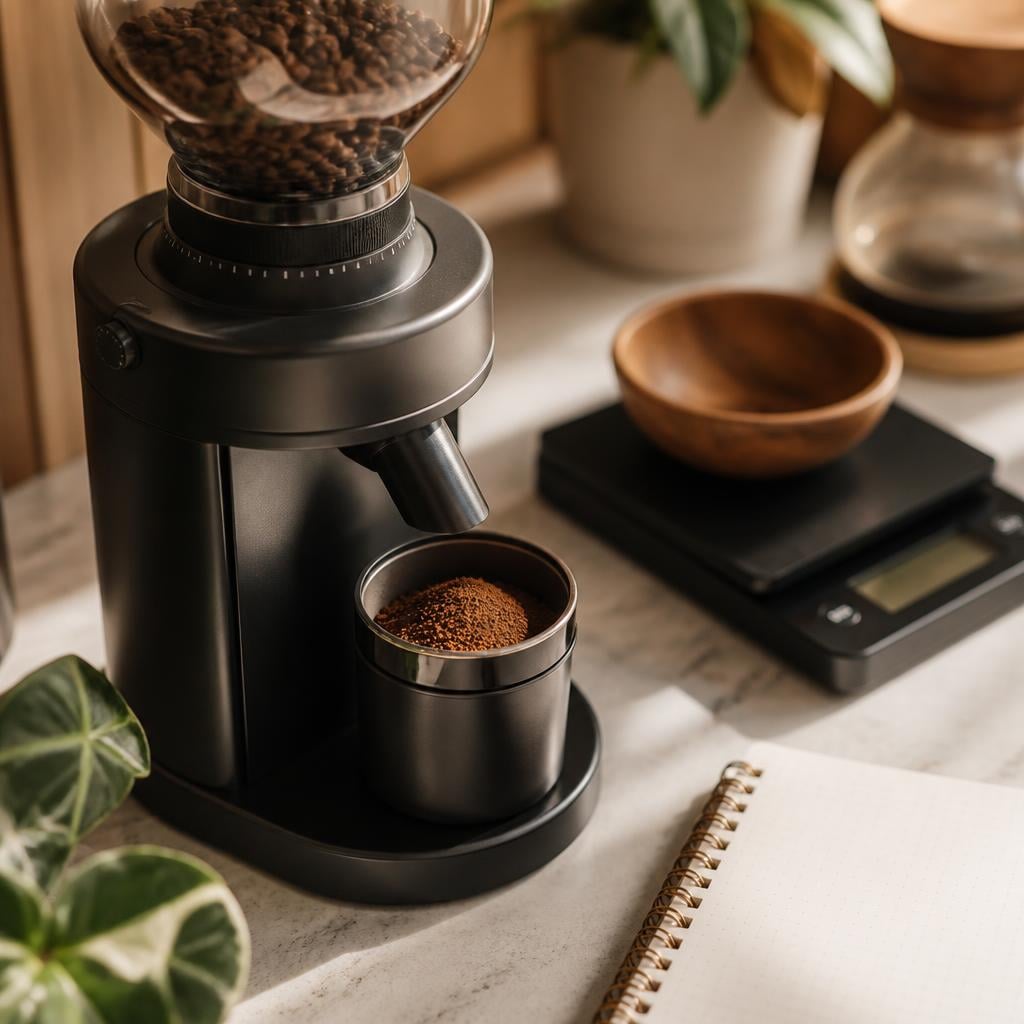
- Use a burr grinder and set it for a consistent grind appropriate to your brew method. Test and adjust in small steps until results are repeatable—see my grinder notes at Baratza Encore vs Timemore C3.
- Start with common coffee-to-water guidelines for your method and adjust to taste; the Brew Ratio Calculator helps keep numbers consistent.
- Aim for an appropriate brew temperature for your method and use a thermometer if you’re unsure.
- Clean equipment regularly per the manufacturer’s guidance and your water/use conditions; harder water or heavier use needs more attention.
- If you want a single convenience feature, a programmable start/timer or a simple automation is a practical place to begin.
Those steps give consistent improvements for most homes without the extra cost and maintenance of advanced automation.
Watch the short version
Frequently asked questions
Do smart coffee machines make noticeably better coffee?
Not inherently. They repeat programmed recipes, but better coffee comes from fresh beans, a good grinder, correct water, and clean equipment. Automation can help consistency but won’t fix stale beans or a bad grind.
How often do smart machines need maintenance compared with simple models?
Smart machines often need more frequent checks because they have pumps, sensors, and internal water paths that can require cleaning and scale control. Simpler machines generally have fewer internals to service and can be lower maintenance overall.
Is app dependence risky for long-term use?
Yes. Apps can change, servers can shut down, or connectivity can fail. If a machine relies on cloud services for basic features, those features can disappear or degrade over time.
If I want automation, what’s the most practical feature to choose?
Start with one feature you’ll actually use, like a programmable start/timer or a reliable preset. Those give convenience without the full complexity of a connected ecosystem.
Should I buy a smart machine if I like gadgets?
If you enjoy gadgets, don’t mind occasional troubleshooting, and will use the smart features regularly, it can be enjoyable. Expect added maintenance and faster perceived depreciation; match your expectations to how often you’ll use the extras.
Tools and gear mentioned
Free tool
Coffee Brew Ratio Calculator
Coffee-to-water for pour-over, French press, AeroPress and espresso.
Open calculatorFree tool
Cost Per Cup Calculator
What your home coffee really costs versus the café.
Open calculator