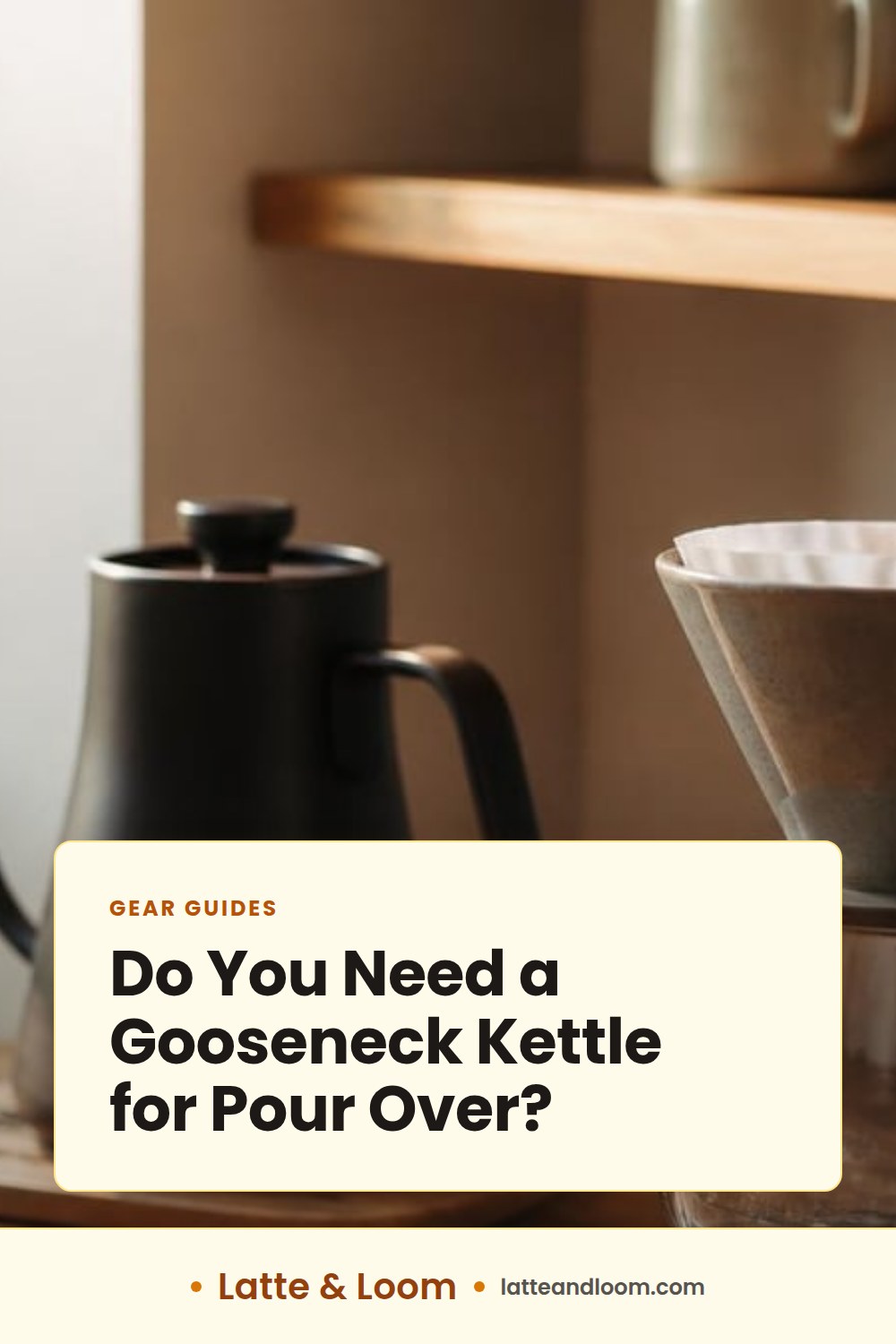
Yes. A gooseneck kettle can help pour over coffee by giving you finer flow control and steadier, repeatable pours. You do not need one to make good coffee if you already pour carefully, brew in batches, or prefer a simpler routine.
First do this: answer the question plainly
A gooseneck kettle pour over helps when you want precise, slow pours and repeatable control across cups. If you pour steadily with a normal kettle, or you brew larger batches, it may not move the needle enough to justify the cost.
I wrote this from practical experience in a small home setup and from what I see other home brewers do. Test the steps on your own gear and adjust for your taste.
What a gooseneck kettle is and how it changes flow
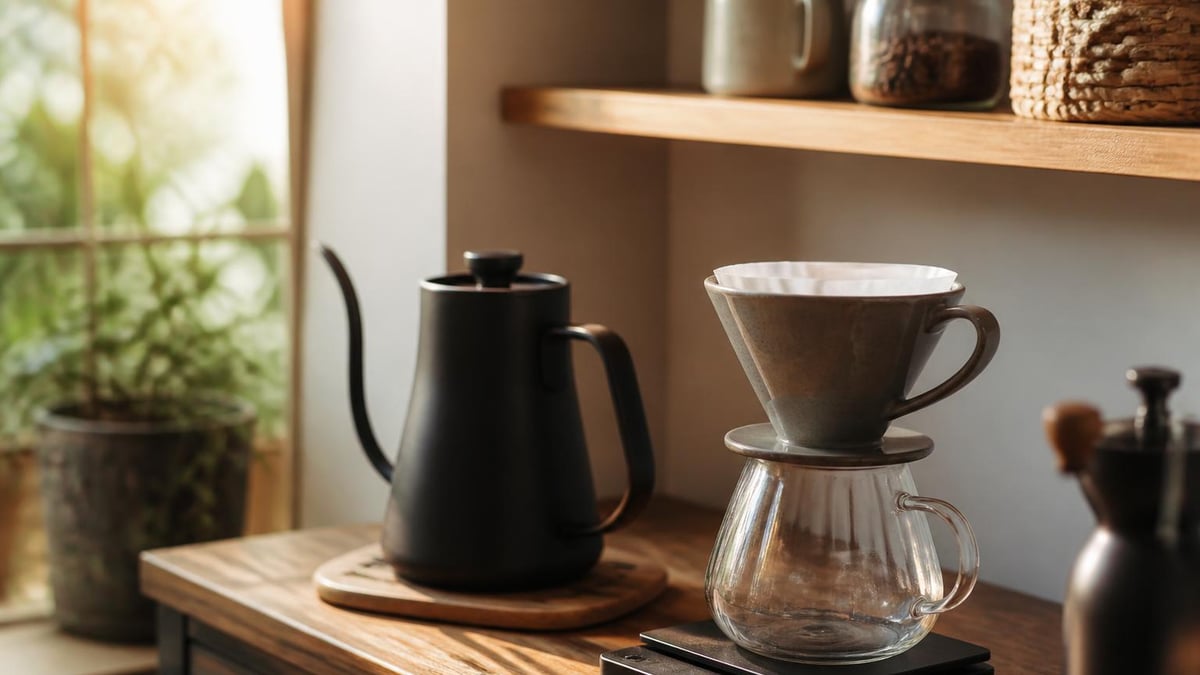
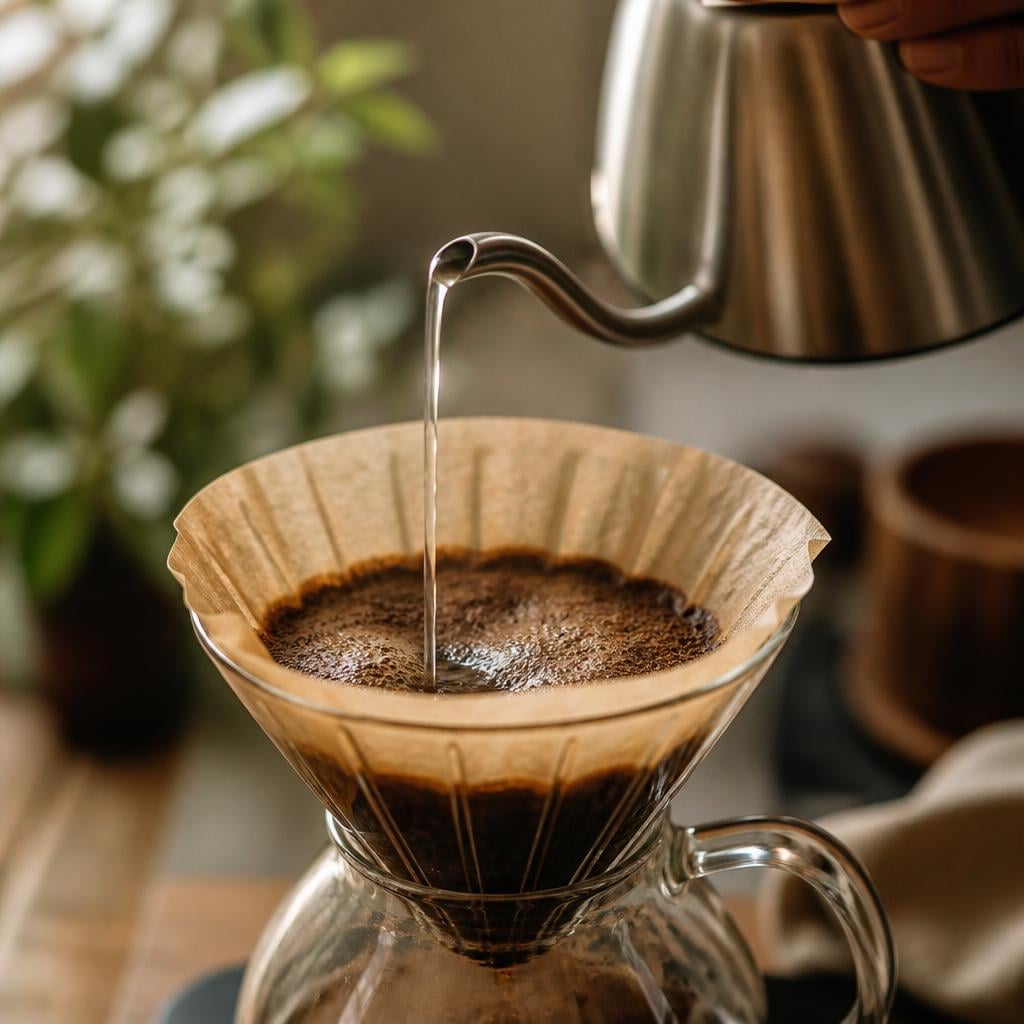
A gooseneck kettle has a long, thin spout that narrows the stream and slows the flow. That narrower stream makes it easier to place a small, controlled pour or to trace concentric circles without dumping water. The feel is different: less sudden gush, more slow, deliberate additions.
Typical effects people notice:
- Narrower stream diameter for more precise targeting.
- Lower maximum flow rate compared with a wide, standard spout.
- Finer control by small wrist movements.
When you can pour well without one
You can pour well without a gooseneck if:
- You can hold a standard kettle low and steady.
- You are brewing larger doses or batch brews where micro-control matters less.
- You prioritize speed over micro-control.
I get reliable single-cup results with a regular stovetop kettle by practicing steady holds and pouring in measured pulses.
What to measure to decide if it’s worth the price for you
Measure these three things over a few brews:
- Brew-to-brew time variance: do your pours produce consistent total brew times?
- Cup-to-cup taste variance: are your extraction and mouthfeel inconsistent?
- Pour comfort: does pouring fatigue your hand or cause shaky pours?
If you see big variability in time or taste and your pours are shaky, a gooseneck is more likely to help.
What a gooseneck kettle changes in pour over
Flow control and needle points
A gooseneck allows needle points and narrow stream targeting. Use this to wet only the coffee bed center, the edges, or trace the center-out spiral. That matters when you want to adjust which part of the bed gets water and when.
Practical targets to test rather than fixed rules:
- Aim for water that is hot but not aggressively boiling; many brewers let water rest after boiling and taste to find what works for their beans.
- Start with a modest dose and adjust by taste rather than locking to one ratio. Small changes in dose affect strength and extraction.
- Use a brief bloom phase to let trapped gases escape; wetting and visual cues are often better than a rigid countdown.
- Monitor total brew time and note how changing grind and pour speed affects extraction.
Use these as starting points to test whether changes in pour pattern from a gooseneck yield real taste differences.
Consistency across cups
Because the spout narrows the stream, many people find it easier to repeat the same pour path. If you are chasing small adjustments - slightly brighter notes or more even extraction - that repeatability can make differences easier to spot.
Impact on extraction timing
Slower pours let you stretch extraction time without changing grind as much. Faster, wider pours shorten contact time unless you compensate by coarsening the grind.
Example effects from practice:
- Slower, precise pours tend to increase contact time and highlight body and sweetness.
- Wider, faster pours shorten contact time and can emphasize clarity and brightness. Observe how grind and pour interact and adjust one variable at a time.
If you already pour with intent, do you need one
Situations where a normal kettle works fine
- Brewing two or more cups at once with a larger cone or a Chemex.
- You prefer quick brews and are happy with the flavor.
- You are using immersion methods like Aeropress or French press.
If your results are consistent and you like the taste, a gooseneck is not necessary.
Brewing in batches vs single cups
Gooseneck kettles tend to be most helpful for single-cup pours where pour control and repeatability matter. For larger batch brews, the difference is usually smaller. For big Chemex or multi-cup brews, I often use a regular kettle and focus on grinder and technique first.
Your grinder, scale, and kettle combo
Control is a system. A precise grinder and a consistent scale usually change cup quality more than switching from a normal kettle to a gooseneck. If your grinder produces inconsistent particle size, a gooseneck will only help so much.
How to decide for your setup
Step by step decision framework
- Brew 5 cups using your current routine and record total brew time and taste notes after each cup.
- If time varied a lot or taste varied between cups, practice pouring technique for two sessions without buying anything.
- If you still see variability, try a smaller spout on a household teapot or borrow a gooseneck for one week.
- If borrowing shows clearer, repeatable improvements in cup quality and control, budget for a gooseneck.
This numbered list helps you test before you buy.
Budgeting for a gooseneck kettle
Think of the kettle as a tool that may or may not offer measurable improvement for your workflow. If you decide to buy, prioritize the features you actually need: a simple tapered spout, a comfortable handle, and a stable flow. Temperature control is an extra feature and will raise cost.
Shop by features rather than brand. Check return policies so you can test one at home on your setup. For notes on when gear spending stops making sense, see At What Price Does Expensive Coffee Stop Being Worth It.
Alternatives that can approximate control
- Use a standard kettle with a smaller pour spout or remove the lid and use the tip of the spout to create a thinner stream.
- Buy a stovetop gooseneck adapter or a low-cost manual pour spout.
- Practice pour pauses, lower kettle height, and measured pulses for slower flow.
These options will not perfectly match a dedicated gooseneck, but they reduce upfront cost while you test whether refined control matters to you.
If you choose to buy, what to look for
Spout shape and flow feel
Look for a tapered spout that produces a narrow, steady stream. The spout length affects how close you can get to the coffee bed. If possible, test the actual flow before buying.
Comfort and weight
Try the kettle filled with water if you can. A full kettle can feel heavy. Handles that keep the wrist neutral reduce fatigue during slow pours.
If you are setting up a small corner for brewing, also see practical setup ideas in Apartment Coffee Station Ideas: A 60 cm Corner That Works and How to set up a coffee station in a small apartment.
Thermometer and insulation
If you care about tight temperature control, choose a kettle with built-in temperature control or one that is easy to check with a thermometer. Otherwise, let boiled water rest briefly; rest times are a practical way to lower temperature before pouring.
Durability and price range
Stainless steel bodies and reliable joints matter more than flashy finishes. If you plan to use it daily, prioritize solid construction and a good return policy. For a personal take on gear choices, read Why Owning the Best Gear Made Me a Better Barista.
Practical brewing guidance you can use today
Grind size, dose, and bloom timing
- Start with a modest dose and adjust by taste and strength rather than fixing one ratio from the start.
- Aim for a grind in the medium range for cone filters; adjust finer if the brew tastes under-extracted or coarser if it tastes over-extracted.
- Use a small wetting of the coffee bed to let gases escape and watch for visual signs of bloom. Rely on the look and feel of the bed rather than a strict countdown.
- Monitor total brew time as a control variable and note how grind and pour speed affect it.
Keep tasting notes.
Pouring pattern options
- Center pulse: pour to the center in short pulses to encourage even saturation.
- Spiral: trace small concentric circles from center outward while keeping the stream low.
- Edge focus: deliberately wet the outer ring early for a more even extraction in some cone shapes.
A gooseneck helps execute these patterns more consistently, but practice with any kettle first.
Troubleshooting common issues
- Over-extraction: try a coarser grind or shorten contact time.
- Under-extraction: try a finer grind or lengthen contact time.
- Channeling: reduce pour height, slow your stream, and target dry spots to even saturation.
Real world considerations and trade offs
Kitchen space and heat source
If you have limited counter space, a narrow gooseneck kettle may store more neatly than a bulky stovetop kettle. For electric kettles, consider whether your outlet setup handles an additional device.
Maintenance and longevity
Descale regularly if you have hard water. Thin spouts are more likely to clog if minerals build up. Stainless steel is usually easier to clean than painted finishes.
Temperature control - stovetop versus electric
Some setups require measurement for precise temperature control. Electric kettles with temperature settings make set-and-forget temperature easier where those models are available. Stovetop kettles typically require either timing or a thermometer to track actual water temperature.
What matters most to flavor
Grind consistency, water temperature, and total contact time generally produce the largest flavor changes. The kettle influences pour precision and repeatability, which help you tune those variables. Test one change at a time and take notes.
Frequently asked questions
Do I need a gooseneck kettle to make good pour over coffee?
No. You do not need a gooseneck to make good pour over coffee. If you pour steadily, use a consistent grind and dose, and like your coffee, a regular kettle will serve you. A gooseneck is a tool for people who want finer control or more repeatable pours.
What is the biggest benefit of a gooseneck kettle?
The main benefit is precise flow control. That precision helps you target parts of the coffee bed and repeat the same pour pattern across brews, which makes it easier to tune extraction in small increments.
Can I get similar results with a standard kettle?
Yes. If you pour slowly, keep the kettle low, and maintain consistent timing, you can get similar results. For larger batches or inconsistent grinders, the difference is smaller. Borrowing a gooseneck to test on your setup is a low-cost way to see if it matters.
What price range is reasonable for a quality gooseneck kettle?
Price depends on features you want, such as temperature control and build quality. Look for a model with a consistent spout, comfortable handle, and good reviews for durability. Compare features and return policies rather than focusing only on sticker price.
Are there downsides to gooseneck kettles?
Yes. They can be heavier when full, take more space, and thin spouts can clog with mineral buildup. Some people find them slower for large pours, and they add cost without guaranteed flavor improvement for every brewer.
Tools and gear mentioned
Coffee Brew Ratio Calculator
Coffee-to-water for pour-over, French press, AeroPress and espresso.
Cost Per Cup Calculator
What your home coffee really costs versus the café.
Coffee Station Budget Planner
Pick a space and a budget tier and get an itemised shopping list.
Caffeine Calculator
Caffeine per drink and your daily total against the 400 mg guideline.