A moka pot is usually the better starting point for a small kitchen when low cost, easy storage, and strong coffee matter most. Choose an espresso machine when you want true espresso, repeatable shots, and built-in or dedicated milk steaming, with room for the full setup.
Choose a Moka Pot for Most Small Kitchens
Pick the moka pot if you want low cost, easy storage, and strong coffee
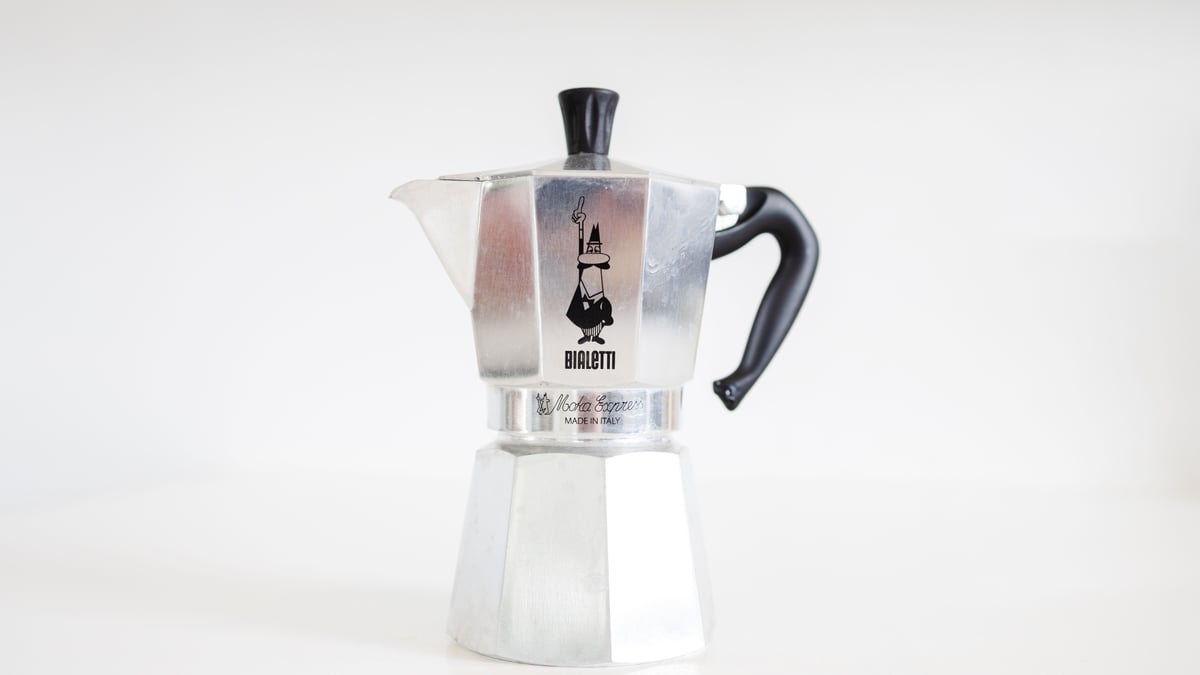
A moka pot has a small footprint and can live in a cabinet between uses. It does not need a permanent counter position, an outlet, or a water reservoir. You can use pre-ground coffee, though a grinder gives you more control.
Its coffee is concentrated and bold, but it is not the same drink as a café espresso shot. For many home drinks, that difference is fine, especially when you mix the coffee with hot water or milk.
Choose an espresso machine if you need true espresso and built-in milk steaming
An espresso machine makes sense when espresso itself is the priority. It also suits regular cappuccino, latte, and small milk drink preparation when you want steam or automatic frothing in the same setup.
The machine is one part of the setup. Plan for a grinder, coffee storage, cups, a tamper when required, and room to fill, brew, steam, and clean. A home coffee station checklist can help you list the pieces before you shop.
The short answer based on your available space, budget, and morning routine
| Need | Better starting point | What to verify at home |
|---|---|---|
| Lowest entry cost | Moka pot | Complete purchase list, including grinder and kettle |
| Smallest storage footprint | Moka pot | Brewer, coffee, kettle, and grinder storage |
| True espresso | Espresso machine | Machine specifications and suitable grinder |
| Milk drinks | Espresso machine | Steam wand or frother design |
| Minimal cleanup | Moka pot | Your actual rinse and drying routine |
| Portability | Moka pot | Heat source, packed size, and travel storage |
| Willingness to learn | Either | How much dialing in and cleaning you enjoy |
For a renter, office worker, or anyone with shared counters, I would start with a moka pot. For a dedicated espresso drinker with a permanent coffee corner, an espresso machine is the better fit.
Counter Space, Storage, and Kitchen Placement
How to measure your usable counter space before buying
Do not shop from a product photo alone. Measure the space you actually have.
Record these numbers for every item:
- Width from side to side.
- Depth from the wall to the counter edge.
- Height, including room to open a lid or remove a water tank.
- Outlet distance and cord path.
- Storage footprint when the item is not in use.
Add the grinder, kettle, scale, coffee canister, cups, and milk pitcher to the same list. A compact brewer can still crowd the counter once its accessories are included.
Where a moka pot, kettle, grinder, and coffee canister can live
A moka pot can usually go in a drawer or cabinet, while the kettle stays near an outlet. The grinder and coffee canister need a dry, easy-to-reach spot. If you move everything out each morning, count how many trips that takes.
Measure the group as one storage footprint. Include the moka pot handle, kettle lid, grinder hopper, and the space needed to lift each item out.
Where to place an espresso machine, grinder, cups, and milk pitcher
An espresso machine needs a working zone, not just a parking spot. Leave room for the grinder beside it, the cup under the group head, and the pitcher near the steam wand. The water tank or plumbing connection may need access from above or behind.
Check vertical clearance before placing the machine beneath cabinets. Measure the space needed to remove the portafilter, drip tray, water tank, and bean hopper.
For more small-space planning, see my guide to setting up a coffee station in a small apartment.
Storage and portability for renters, offices, and shared kitchens
The moka pot is easier to put away and carry between rooms. It works well when the coffee station must disappear after use. An espresso machine suits a stable location because moving it may involve water, loose grounds, and a hot surface.
Cost: Purchase Price, Coffee, and Accessories
What to budget for the brewer itself
Compare complete setups rather than brewer prices alone. Check current prices from the retailer and manufacturer before you buy.
The hidden cost of a suitable grinder, scale, kettle, and tamper
A complete-cost checklist should include:
- Brewer
- Grinder
- Kettle, if needed
- Scale
- Tamper, if required by the espresso machine
- Coffee
- Milk
- Filters, if the setup uses them
- Replacement gaskets, screens, baskets, or other wear parts
- Cleaning supplies
- Cups and a milk pitcher
A moka pot may let you begin with equipment you already own. An espresso machine may require more dedicated accessories before you can make the drink you want.
How coffee dose and milk use affect ongoing cost
Track your actual coffee dose, number of drinks, milk volume, wasted shots, and replacement parts for four weeks.
Milk drinks can use more ingredients than black coffee. Espresso dialing-in can also involve discarded coffee while you adjust grind size and dose. Your habits matter more than a simple brewer comparison.
Which setup offers the lower-risk entry point
A moka pot is the lower-risk test when you want concentrated coffee but are unsure about committing counter space and money to espresso. You can later add a grinder or milk frother if the drink suits you.
An espresso machine is the better first purchase when you already know you want espresso-style preparation and will use the setup often.
A simple first-year budget worksheet readers can fill in
| Item | One-time cost | Monthly cost | Twelve-month cost |
|---|---|---|---|
| Brewer | $____ | $0 | $____ |
| Grinder | $____ | $0 | $____ |
| Kettle or scale | $____ | $0 | $____ |
| Tamper or pitcher | $____ | $0 | $____ |
| Coffee | $0 | $____ | $____ |
| Milk | $0 | $____ | $____ |
| Filters and cleaning supplies | $____ | $____ | $____ |
| Replacement parts | $____ | $____ | $____ |
| Total | $____ | $____ | $____ |
How Each Method Fits Into a Morning Routine
Moka pot workflow from filling the base to serving
- Start the timer before taking the moka pot and ingredients from storage.
- Fill the base with water according to the brewer instructions.
- Add coffee to the basket and assemble the pot.
- Heat it, then monitor the brew until it finishes.
- Pour and serve.
- Start a second timer for rinsing, drying, and returning each item to storage.
- Record active time, waiting time, and cleanup time.
Espresso machine workflow from grinding to pulling a shot
- Start the timer before weighing beans or turning on the machine.
- Grind the dose and prepare the portafilter.
- Tamp if the setup requires it.
- Lock in the portafilter and pull the shot.
- Steam or froth milk for a milk drink.
- Serve the drink.
- Purge and wipe the steam wand, knock out the puck, rinse the basket, and wipe the work area.
- Record warm-up, preparation, brew, milk, and cleanup times separately.
Track grinder setup, machine warm-up, water filling, milk preparation, rinsing, wiping, and putting everything away. Repeat each test three times and use your average.
Batch size, single servings, and choosing the right capacity
Match capacity to your normal drink. Record how much coffee the brewer makes, how much you drink, and whether leftovers are useful or wasteful.
A small moka pot may suit one person, while a larger one may make more than one drink. Espresso machines usually make individual shots, so consider how many drinks you prepare back to back.
Noise, heat, and steam in a compact kitchen
Listen to the grinder, pump, kettle, and steam wand in your own kitchen. Check whether steam reaches cabinets or hot parts crowd your sink and prep area.
Taste, Strength, and What Counts as Espresso
How moka pot coffee differs from machine-made espresso
A moka pot produces concentrated stovetop coffee with a different texture and extraction style from espresso made by a dedicated machine. It can taste intense and work well with milk or water, but it is not identical to a café espresso shot.
Pressure, extraction, grind size, and dose in plain language
Follow the moka pot instructions and adjust one variable at a time during testing. Use grind size, dose, water amount, and brew result as practical comparison points. A finer grind is not automatically better, and a stronger-tasting cup is not automatically espresso.
Why strong coffee is not automatically true espresso
“Strong” describes how intense a drink tastes. Espresso refers to a specific brewing method and result, so moka pot coffee can be strong without being true espresso.
Using each method for Americanos, iced coffee, cappuccinos, and lattes
Both methods can be used for coffee mixed with water or milk. Moka pot coffee works well in an Americano-style drink, over ice, or with warmed milk. An espresso machine gives you the base intended for espresso drinks. For a smaller milk drink, compare the result with this guide to making a cortado at home.
What milk-frothing options add to the decision
Check whether the espresso machine has a steam wand, automatic system, or no frothing feature. With a moka pot, add a separate whisk, handheld frother, or steam appliance and include its storage space.
Cleaning, Safety, and Long-Term Maintenance
Moka pot cleaning after every brew
Empty the grounds, rinse the parts, and let them dry fully before storage. Check the gasket, filter, and threads during routine cleaning.
Espresso machine backflushing, descaling, and water care
Follow the manufacturer’s schedule for rinsing, backflushing, descaling, water filters, and steam-wand care. A machine with more parts and functions gives you more tasks to track. My guide to descaling an espresso machine safely covers one part of that routine.
Heat, pressure, steam, and safe handling in a small workspace
Follow the manufacturer’s instructions, keep handles and cords clear of the counter edge, and let hot parts cool before moving or washing them.
Parts that wear out and what durability may depend on
Check replacement-part availability for gaskets, screens, baskets, seals, filters, and steam components. Record which parts the manufacturer lists as replaceable.
When the extra maintenance is worth it
Extra maintenance is worthwhile when you use the machine often and value espresso or milk drinks enough to keep the routine. If you want coffee with fewer steps and no permanent appliance, the moka pot is easier to justify.
A Small-Kitchen Buying Checklist
Measure width, depth, height, and outlet distance
Measure every item and write down the storage footprint. Include cabinet clearance, cord reach, tank access, and room for hot equipment.
Choose a moka pot capacity or espresso machine footprint
Match capacity to the number of drinks you make. For an espresso machine, measure the full station, including grinder, pitcher, cups, and cleaning area.
Decide whether you need a dedicated espresso grinder
A dedicated grinder is a practical question for espresso, not just a shopping extra. Test your preferred coffee with the grinder you already own before buying a machine.
Set a maximum budget for the complete setup
Use the worksheet above and include coffee, milk, filters, cleaning products, and replacement parts. Do not set the budget from the brewer price alone.
Test your preferred drink before committing
Make a moka pot latte or Americano if that is what you normally drink. If possible, taste a machine-made espresso drink and time the full cleanup routine. The better choice is the one that fits your counter and the routine you will actually repeat.
Frequently asked questions
Does a moka pot make real espresso?
No. A moka pot makes concentrated stovetop coffee, while espresso comes from a dedicated espresso brewing method. Moka pot coffee can still be strong and satisfying in milk drinks or coffee mixed with water.
Is a moka pot cheaper than an espresso machine over time?
Compare the complete equipment list, coffee dose, milk use, cleaning supplies, and replacement parts for your own routine. The brewer price alone does not show the full cost.
Which option takes up less counter space in a small kitchen?
Measure the brewer, grinder, kettle, coffee storage, outlet clearance, and storage footprint before deciding. A moka pot is easier to store away, while an espresso machine needs a stable working zone.
Can I make lattes and cappuccinos with a moka pot?
Yes, but you need a separate milk-frothing method, such as a handheld frother or whisk. The coffee base will taste different from an espresso-machine latte or cappuccino.
Which is easier to clean and maintain: an espresso machine or a moka pot?
A moka pot has fewer parts to rinse. An espresso machine requires care for the group, steam system, water, and cleaning cycle, based on the machine instructions.
Photo credits
Photo (inline 1): rawpixel via Openverse, CC0 1.0