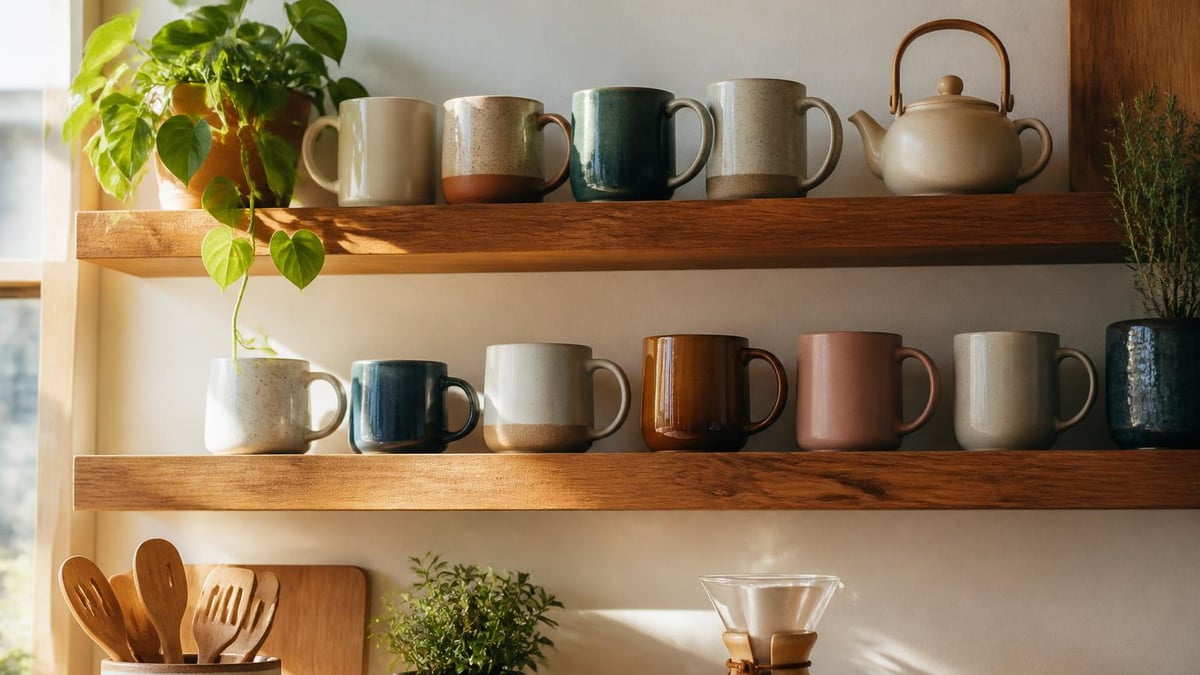

Decide whether your mug collection should be used, admired, or both - I recommend a practical mix: keep most mugs within easy reach for daily coffee, and place a few favorites on clear display. That keeps the collection useful, prevents clutter, and makes mornings simpler.
Start with a purpose
Be explicit. Ask: do I want mugs for daily use, seasonal rotation, or an all-visible display? I aim for a practical goal: keep 6–12 mugs ready for daily use and place 4–8 favorites where you can see them. That balance keeps shelves from becoming crowded and makes mugs accessible.
- Daily-use mugs: accessible, dishwasher-safe, heatproof.
- Display mugs: favorites, fragile or sentimental pieces, cleaned and rotated.
- Seasonal/special: boxed or stored and swapped in as needed.
Choose a visual anchor
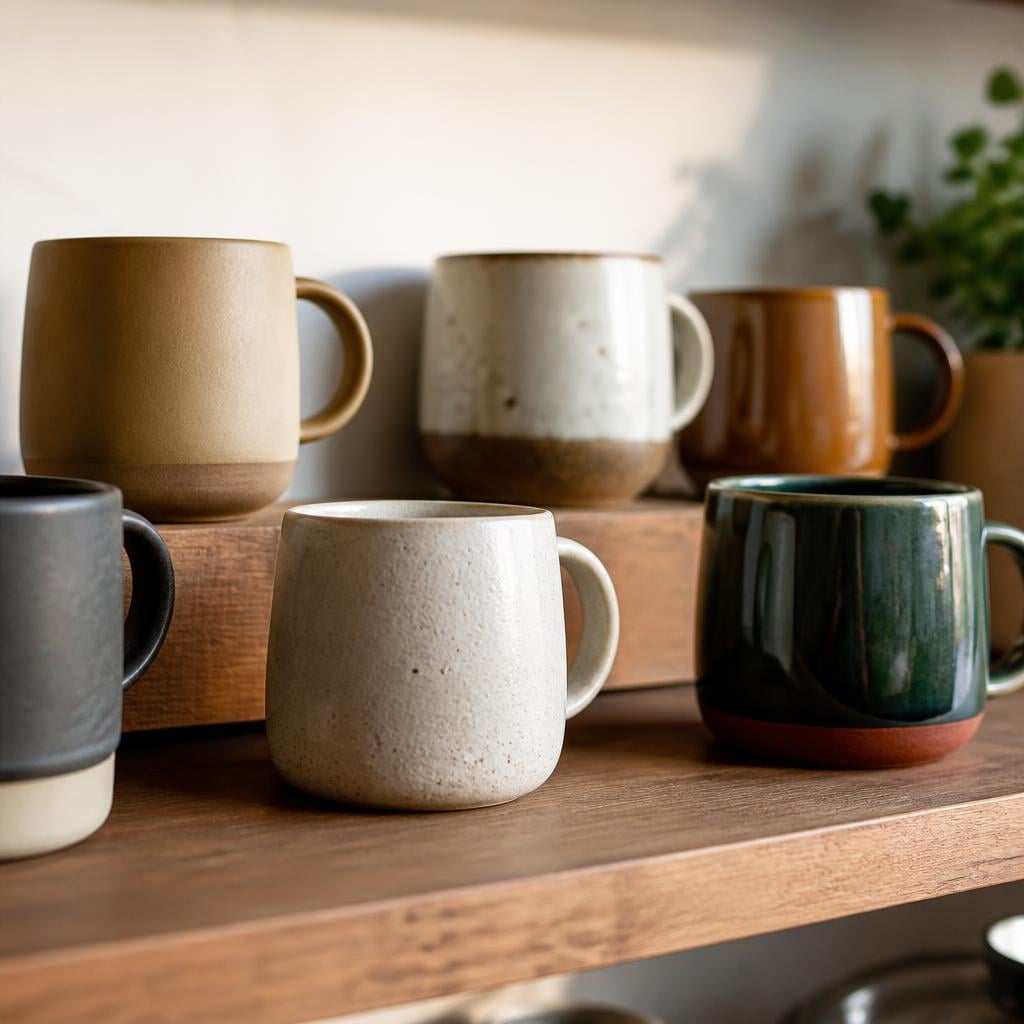
Pick one or two mugs that define the color story or feel - a deep navy stoneware, a speckled cream pot, or a bright hand-painted cup. Place that anchor in a dominant spot: the center of a shelf or the right end of a linear display. Use surrounding mugs to echo color, glaze, or era so the display reads intentional rather than random.
Group by theme, not random placement
Group mugs by function, color family, or era. Examples that work:
- Function: heatproof morning mugs vs. delicate porcelain for evening tea.
- Color: neutrals together, bold accents grouped.
- Era or maker: vintage sets or travel souvenirs grouped.
A consistent grouping helps the eye move across the display and makes it faster to choose a mug each morning.
Balance practicality with aesthetics
Place everyday mugs within arm’s reach - usually lower shelves or the countertop. Reserve the highest, protected shelves for seasonal or fragile mugs. That way the display looks curated and you don’t have to reach or climb for your morning cup.
Practical tip: keep 2–3 reserve mugs on a nearby lower shelf for guests or different drinks.
Think levels and depth
Visual interest comes from layers, not clutter. Use shelves at different heights or a shallow tray with a small riser to stagger mugs. Avoid lining everything side-by-side in one plane.
- Use a 1–2 inch riser to lift a focal mug to eye level.
- Shallow shelves (6–8 inches deep) prevent mugs from getting pushed back and forgotten.
Keep maintenance in mind
A display that looks good is one you can maintain. Wipe mugs dry before placing them back to avoid water spots. Rotate pieces so no glaze sits in direct sun for months. Remove any mug with chips or loose handles from the display for safety.
Routines I use:
- Dust the display every two weeks.
- Rotate 20–30% of mugs monthly so favorites get regular use.
Define the display space: selecting shelves and locations
Choose a stable spot, away from direct sun, and convenient for your morning routine. Measure first: width, height, and depth will dictate hardware and shelf spacing.
- Aim for at least 6 inches between shelf levels for standard mugs.
- Standard shelf depths: 6–8 inches keeps mugs visible; 10–12 inches can hide handles.
- Use a mix: open shelves for everyday options; a shallow cabinet with glass for dusty or fragile pieces.
For small spaces, vertical narrow shelving or a rolling cart lets you move mugs to where you brew. I wrote about arranging a tight coffee corner in this piece on small setups: Apartment Coffee Station Ideas: A 60 cm Corner That Works.
Creating a mug color and texture story
Plan before you hang anything. Start with neutrals as a base and add 1–3 accent colors. Contrast matte and glossy surfaces: a matte stoneware next to glossy white porcelain makes each finish read stronger.
Add small labels or tags with a short note - where you bought a mug or the year - to keep the display personal without overwhelming it.
If you make coasters or small accessories, match materials to the mugs. For an easy craft that fits a coffee corner, see Air-Dry Clay Coasters for Your Coffee Corner.
Display methods: shelves, hooks, rails, and trays
- Wall shelves: clean, open look. Mount 1–2 horizontal shelves at eye level and leave space to breathe.
- Hooks: use for mugs with sturdy loop handles; they free up shelf surface for bowls or teapots.
- Rails: good along a backsplash; fits a long, narrow kitchen and keeps mugs off counters.
- Shallow tray: cluster a small set on the countertop and add a keep-dry mat to reduce moisture marks.
Choose hardware rated for the weight and number of mugs - overspec rather than risk a fall.
If you want a cozy, styled nook that isn’t cluttered, I find the tips in How to Style a Trinket Shelf Without Clutter helpful.
Step-by-step plan: a practical setup you can implement
- Inventory and sort. Gather all mugs, wipe them clean, and sort into daily-use, display, and seasonal groups.
- Pick a focal mug. Choose one that anchors the color story and place it in a dominant position.
- Plan levels. Decide on two or three shelf heights; aim for at least 6 inches between levels for standard mugs.
- Arrange by theme. Within each level, group by color family or era, flowing left to right.
- Add props. Place a small teapot, a plant, or a shallow tray to frame the mugs without stealing focus.
- Final touches. Wipe surfaces, step back and adjust spacing so each mug has 2–3 inches side clearance.
- Maintenance schedule. Dust every two weeks and rotate 20–30% of mugs monthly.
Follow these exact numbers where helpful: keep 2–3 inches of width per mug; standard shelf heights of 6–9 inches work for most mugs while tall mugs need 10–12 inches; a 24-inch-wide shelf with three levels can fit about 9–12 mugs plus a small plant or teapot.
Practical maintenance and rotation
Set a calendar reminder. Dust every two weeks and once a month swap roughly a quarter of the display for stored mugs. If a mug shows a crack, chip, or loose handle, remove it from display and use it for non-hot drinks or store it safely. Revisit the color balance when you add new pieces - a small shift can change the look.
Practical sizes and spacing to know
- Minimum vertical spacing: 6 inches between shelf levels for standard mugs.
- Taller mugs: allow 10–12 inches per level.
- Lateral spacing: 2–3 inches per mug to prevent knocking.
- Capacity example: a 24-inch-wide shelf with three levels typically holds 9–12 mugs plus room for a small accessory.
Personalizing the display without clutter
Limit visible mugs so the display reads calm. Use blocks of color rather than scattering bright mugs across shelves. Add a single storytelling item - a small card with the mug’s origin or a tiny framed note - to keep the display personal without making it busy.
For a trinket shelf that doubles as a coffee corner, see these Trinket Shelf Ideas for a Cozy Coffee Corner.
Tools and hardware to consider
- Floating shelf brackets or fixed-wall brackets rated for at least 30 lbs per shelf.
- Cup hooks or peg rails with 50–100 lb total capacity depending on count and mug material.
- Clear-front shallow cabinet (glass doors) to protect against dust while keeping visibility.
Always measure and anchor to studs or use appropriate wall anchors for your wall type.
Watch the short version
Frequently asked questions
How many mugs should I display at once without it feeling crowded?
On a 24-inch-wide shelf with three levels, keep about 9–12 visible mugs. For a single shelf, aim for 4–8. Leave 2–3 inches between mugs so handles don’t bump and the display breathes.
What’s the best way to rotate mugs in and out of daily use?
Set a monthly routine and swap 20–30% of visible mugs with stored pieces. Keep rotated mugs in labeled boxes or bins so you can pull them in seasonally or when you want a change.
How do I protect mugs from dust while keeping them visible?
Use a shallow cabinet with glass doors for delicate pieces. For open shelves, hang mugs on hooks and use a linen runner to reduce dust. Wipe items dry before returning and dust the display every two weeks.
Should I mix different shapes and sizes or keep a uniform look?
Mixing adds personality, but use a consistent color story or material to avoid chaos. If you want a calmer look, limit shape variation and stick to similar heights and tones.
What tools or hardware are most reliable for hanging mugs on walls?
Cup hooks screwed into solid wood or a rail attached to studs are reliable. If you can’t hit studs, use heavy-duty wall anchors rated for the load. Choose metal hardware rated for at least 30–50 lbs for small displays; increase capacity for larger sets.